

The commemoration of 50th Anniversary of the Revolutionary School

Researched and compiled by

Resoum Kidane : 26/10/2026

During the liberation struggle, an early EPLF slogan was, "Illiteracy is our main enemy." To combat this, the EPLF launched a new initiative in the mid-1970s by publishing a story booklet called Gereyn Melvyn (ገረይን መለይን). This booklet helped lower illiteracy rates among new recruits in the training centres and combat forces. As an extension of this campaign, the EPLF founded the Revolutionary School (Bet Timhirt Sewra, or "Zero School") in the liberated area of Sahel in 1976. The aim of the school was to teach traditional academics (such as mathematics and science) alongside political education to children displaced by the conflict, as well as young runaways who wanted to join the front lines but were underage for the combat forces.

The establishment of schools by the EPLF during the liberation struggle was not the first of its kind in the history of national liberation movements. SWAPO (South West Africa People’s Organization), the ELF (Eritrean Liberation Front), ZANU (Zimbabwe African National Union), and other movements established and ran extensive networks of schools. Tesfamariam (2003) notes that SWAPO provided various social services, including education. Tesfamariam also adds that the ANC argued education should develop skilled human resources capable of managing vast socio-economic growth in the post-liberation era. While the ELF and EPLF offered various social services—such as education in liberated areas and refugee camps in Sudan—these programs aimed primarily to indoctrinate children with each front's political ideology.

Following the ELF's defeat in 1980, both the ELF and the EPLF began to operate schools in Kassala, Sudan, using education as a battleground for political influence and recruitment. The competition between these schools reflected the broader ideological, ethnic, and military civil wars fought between the two fronts. Each organization utilized classroom instruction to cultivate a distinct political consciousness among refugee youth. The ELF and EPLF did not organize peaceful interschool competitions during the liberation struggle; instead, they engaged in a fierce rivalry over student recruitment and ideological dominance in Eritrea's education system.

The battle for student recruitment between these two fronts had been going on for many years. Following a power struggle within the ELF leadership, the General Union of Eritrean Students (GUES)—established in 1968 by student chapters in Cairo, Damascus, Baghdad, and Europe—split into GUES-Baghdad and GUES-Cairo to support the ELF-PLF (led by Osman Saleh Sabbe) and the ELF (led by Idris Adem), respectively. Throughout the 1970s, both fronts targeted young, educated Eritreans from institutions such as the University of Asmara (formerly Santa Familia) and Addis Ababa University. Most students from Addis Ababa University joined the EPLF, while those from the University of Asmara joined the ELF. Both fronts also established their own independent administrations and school networks within liberated zones to indoctrinate youth and combat illiteracy. While ELF and EPLF educational programs successfully built national consciousness and secured political indoctrination, they failed to address the practical economic conditions required for post-liberation development.

This raises a critical question regarding the legacy of these revolutionary schools: did the EPLF possess a genuine vision for education as a driver of post-liberation socioeconomic growth? Marking the 50th anniversary of the Revolutionary School (Bet Timhirt Sewra or Zero School), this text reviews its history from the foundational phase (1975–1976) through the liberation phase (1976–1991).The final section analyses post-liberation academic education under the EPLF and PFDJ to assess whether the EPLF had a clear, long-term vision when the Revolutionary School was founded in 1976.

Background information on the establishment of the Revolutionary School (June 1975–September 1976)

A massive influx of educated urban students—from both secondary schools and universities—as well as professionals (such as teachers and doctors) joined the ELF and EPLF in the mid-1970s. Most were recruited during their studies. Despite this active recruitment, their arrival at the military training centers was poorly received by the leadership of both fronts—especially by EPLF leader Isaias Afwerki, who viewed them with suspicion.

In the history of the Eritrean Revolution, a similar shift occurred in 1965 when better-educated members of the Haraka joined the ELF. Their arrival created tension and conflict within the organization due to the altered social composition of the Eritrean Liberation Army (ELA). Viewing the newcomers with suspicion, the old ELF leadership deliberately divided the army along regional and ethnic lines. They established five distinct military zones to secure their own power.

Similarly, in the mid-1960s, a clandestine group of Eritrean students was formed at Addis Ababa University, likely by Kidane Kiflu. Following its creation, an increasing number of Eritrean university students from Ethiopia joined the ELF, many recruited directly by Kidane. However, these 1960s student recruits were not welcomed by the Qiyada al-Amma. Hundreds of them—referred to at the time as "Sriya Addis"—were executed on the mere suspicion of being Ethiopian agents. During the 1970s, Isaias and his EPLF collaborators grew wary of well-educated, technically qualified new arrivals, viewing them as a threat to the Front's established leadership. To suppress these individuals and neutralize democratic movements, the EPLF hastily established rudimentary units for trade, agriculture, signaling, and education at Beleqat. By 1975, this location evolved into the EPLF's first permanent strategic rear base.

In July 1975, a few hundred well-educated recruits who had completed their military training were assigned to each unit. Of these, 36—mostly university students and a few teachers—were assigned to the training department. Their task was to design a basic curriculum without any prior preparation or reference materials. A month later, in August 1975, several new units were established under the Department of Information and Propaganda, including those for education, culture, photography, a library, and the printing house branches at Beleqat. Consequently, the 'teacher committee' members previously assigned to the military training centre were transferred to the Information Department. However, intense aerial bombardments at Beleqat forced the Department of Information and Propaganda to relocate to 'Zero', the code name for Zagere, where the EPLF Signal Branch's communication hub was located. Additionally, Zero served as a vital refuge for civilians escaping the 1975 Hirgigo massacres perpetrated by occupying forces in the Semhar region. Following subsequent aerial bombardments at Zero, most of the displaced people from Hirgigo fled to Sudan. The rest relocated to Debat, which served as a protection centre and refuge until 1978.

Although the Education Branch was established under the Department of Information in 1975, its members—the 'teacher committee' based in a narrow valley called Zero—lacked the reference books needed to design a primary school curriculum. Instead, they spent their time reading Marxist literature and chanting, which made them prime targets for senior Front cadres. These cadres frequently asserted that ten peasants were better than one hundred educators, using this rhetoric to suppress dissent among educated recruits. During this period, educators from urban areas or universities dreaded being labeled as intellectuals. To avoid this, they attempted to act like peasants—a phenomenon known as 'class suicide'—amidst a fierce EPLF campaign against intellectuals. In his discussion of the 1970s class suicide within the EPLF in Eritrea’s Hard-won Independence and Unmet Expectations, Semere Solomon notes that fitting in with the peasantry and concealing one’s identity were essential for acceptance. College students raised in Asmara evenaltered their accents to integrate into the peasant culture, fearing any association with the petty bourgeoisie (Solomon, 2024, p. 190).

Due to the EPLF's mistrust of these recruits, members of the Education Branch (known as "teachers") and other educated fighters within the department were placed under strict surveillance. Kidane, a Santa Familia scholar and head of the EPLF Library at Zero, was imprisoned in early 1976 and later executed. As mentioned earlier, the teaching committee under the Education Branch failed to accomplish its task because the Department did not provide any reference materials. Tesfamariam (2003) notes that the Department decided instead to open a school and formulate a curriculum from scratch. Consequently, the school opened in September 1976 in the base area of Zero. In preparation for this, trainees at the Mahmimet Military Training Centre spent the early part of 1976 building underground, camouflaged shelters to serve as classrooms and accommodation for Bet-Timhirt Sewra (The Revolution School). The former members of the teaching committee were reassigned to the military, the revolutionary school, or the Department of Public Administration (Jemher / ጀማሂር). Among those sent to Public Administration, I recalled names such as :

  • Habtom Gudum
  • Habte Abreha
  • Wadi Zewengel
  • Stefanos (Wadi Bela'i Tawa — who later served as the Eritrean Ambassador to the United Kingdom)

 I recalled the names of the members of the former teaching committee that was deployed with combat forces :

  • Hagos Gebremariam (Brother of Ambassador Adhanom Gebremariam)
  • Tsegay (Drol)
  • Tsegay
  • Hagos Woldu
  • Ma'kele (Former team leader).

In March 1976, the Revolutionary School (Zero) was founded by a few members of the teaching committee of the Education Branch, known as "the teachers." These founders included Petros Hailemariam, Haile Mebrahtu, Alemseged Tesfaye, Goitom Teklemichael, Kal'ab Haile, and Mohammed Ismail. They were joined by Zaid Rasom from the Information Department's Printing.

.

Zaid Rasom joined from Bologna, Italy, in 1975. After completing military training, she was assigned to the information department  in the  late 1975.

Petros Hailemariam became its head. According to Les Gottesman (1998), one of the early schools in the liberated area was the Zero Revolutionary School, started with just five to eight professional teachers. In the articles written by Memhir Woldezgi Kelete (ኣቦሓጎይ)

founded in 1976—the sacrifice of early educators is highlighted. As Teacher Alemseged Tesfaye, one of the first to design curricula during the revolution, noted: "In 1975, about 36 intellectuals gathered in Bleqat to formulate a revolutionary curriculum. However, due to their zeal for sacrifice, only about four intellectual fighters remained to formulate a revolutionary curriculum." (source https://x.com/shabait/status/2095748883439882387. The statements by Teacher Alemseged Tesfaye—who was scapegoated by the senior EPLF cadres—are completely untrue. Although Alemseged was under close surveillance, he was fortunate to escape imprisonment. Furthermore, the number mentioned in his note was incorrect; there were five members, not five members, not four. The fifth member, Petros Hailemariam (the head of the school), was arrested a few months later.

Kaleab Haile, a former secondary school teacher in Ethiopia who joined the revolution, was one of the committee members assigned to the Revolution School when it opened in September 1976. He had joined the EPLF in 1975 alongside more than 40 well-educated individuals, most of whom were teachers—including Habtom Gudum and Kebrab Frey, who were with him at Zero. In his interview with Les Gottesman, Haile stated that most of these well-educated fighters were martyred between 1973 and 1983. This loss was also confirmed by Solomon Woldemichael in his own interview with Gottesman.

This raises a crucial question: Why did the EPLF leadership start the school with only a handful of teachers while deploying the rest of the teaching committee to the front lines and public administration? Was this a decision based on political rather than educational considerations? If the EPLF truly possessed an educational vision, it would have utilised the knowledge of the nationalist scholars on its teaching committee. Instead, teachers like Hagos Gebremariam—a geography graduate unfit for combat—were deployed as front-line fighters. Drastically underutilised Hagos was killed in action at Gahtelay in 1978. Had he and other members of the teaching committee been assigned to the revolutionary school rather than the front lines or public administration, they would have been far more productive, allowing them to formulate a school curriculum from scratch when the school opened in September 1976.

እቲ ኣብ ልዕሊ ምሁራት ዝነበረ ኣጠማምታ ናይ ህዝባዊ ግንባር


"ነቶም ኣብ ኢዶም ዝነበሩ ካብ ምሉእ ዓለም ዝተሰለፉ ብሉጻት ምሁራት ብጉቡእ ክጥቀሙሎም ዘይከኣሉን: ዘይደለዩን 'ሲ፡ ንተማሃሮ ቤ/ት/ሰውራ ኣምሂሮም፡ ኣብዝለዓለ ደረጃ ኣብጺሖም፡ ኣብ ሃገር ምምራሕ ወይ ነቲ ውድብ ቅርጺ ኣብ ምትሓዝ ክሰርሑ ትምኒትን መደብን ነይሩ ኢልካ ምሕሳብ ጽላለ ይመስለ"
: ተወልደ ካሕሳይ

The former Revolutionary School students of Tewolde Kahsay wrote about this: 'They refused and failed to utilize the world-class scholars already available to them. Therefore, to think that they ever had the wish or the plan to educate the students of the Revolution School (Bet-Tsewra), raise them to the highest level, and have them lead the country or work on shaping the organization—I think that is utter madness.' What Tewolde Kahsay states is true: out of the 36 educators, only five members of the Education Branch (referred to as teachers) were assigned to the revolutionary school.

The Opening of the Revolutionary School and Its Development, 1976–1982

Following its founding in March 1976 by members of the teaching committee (known as teachers from the Education Branch), the school prepared its premises for months before the students arrived. After six months of preparation, the Revolutionary School officially began operations in September 1976 with 150 students, offering classes up to the third grade. It provided basic literacy, academic instruction, and political education.

After opening, the Revolutionary School (Bet Timhirt Sewra) began serving children affected by the conflict. It admitted orphans who had lost their families to enemy atrocities, Eritrean refugees from Wad el-Hillo and other nearby camps in Sudan, and children of fighters. It also sheltered families under EPLF care at the Debeat displacement camps, youths who fled to the front lines but were too young to fight, and underage individuals who were later withdrawn from combat forces. Since birth certificates did not exist at the time, ages were estimated by physical appearance, which meant tall or physically mature children were often placed into the program. The first children and youth to arrive included :

  • Alganesh Yemane (Industry) and her brother, the martyr Fitsum Yemane; Helen Girmay and her brother, Medhane; and two other students from the dispersal office.
  • Following them, 70 additional students arrived.These included children of both civilians and fighters sheltered by the EPLF at Deba , such as Ruth Btsamlak and her siblings, Ammanuel and Asther.
  • The remaining arrivals consisted of military recruits who had joined the Front but were too young to carry arms, one of whom was Tesfamariam Embaye.


Students at Revolutionary School, Zero

When the school opened, the headmaster, Petros Hailemariam, was arrested soon after by the Revolutionary Guards. This event marked a continuation of the surveillance targeting Zero's teaching committee. At the time, Petros was a Marxist fighter and a dedicated committee member; I still remember him at the training centre in 1975 with a Marxist book in his pocket. Petros's successor, Hamid Wadi Sheikh, remained in charge of the revolutionary school until the early 1980s. Wadi Sheikh's assignment to the school was not based on his academic ability; rather, it reflected a standard party tactic used in the 1970s to suppress intellectuals.

This oppression was highly evident in 1976 in connection with Goitom Berhe (Bitsay), a law graduate from Addis Ababa. After Berhe was arrested around March 1976, a large number of recruits who had joined the EPLF from high schools and universities were targeted by the EPLF’s security forces. Sherman (1980, p. 64) also states that in 1976, perhaps as many as 200 young EPLF intellectuals were arrested. In his discussion of the 1976 EPLF purge in "The Crown and the Pen", Dr Bereket briefly mentions the fate of the young recruits who had accompanied him to the Sahel in early 1975. He later learned that they had survived, become physically fit, and mastered desert warfare. They had also turned a corner; months of training had purged them of what their trainers called "petty bourgeois aspirations", replacing those goals with a fierce new ideology.

When the Revolutionary School opened in 1976, its members—especially teachers like Petros Hailemariam and Alemseged Tesfay—lived and worked in constant fear. Strict commands intimidated them, turning their daily duties and social interactions into a source of anxiety, characterized by labels such as:

  • Ne Muhur Hemam Aleka = Sickness of Intellectualism
  • Neus Bourgeois tebai Aleka = Petty-bourgeois thinking/behaviour
  • Nay Halefinet Himam Aleka = Ambition for leadership
  • Muhur Tebelasi = Opportunistic intelligentsia
  • Derbika Ketel = Class suicide
  • Anenet = Egoism" source www.ehrea.org/whoaret.php)

Despite the oppression of intellectuals within the Revolutionary School, various departments, and the military, all educated fighters remained dedicated to accomplishing their tasks. Gottesman writes that, “The Zero School started with about 150 students and no more than ten teachers. The situation was incredibly difficult. Imagine what you can achieve with ten or fewer teachers—especially inexperienced ones. There was no curriculum, there were no school supplies, and there was no prior school experience, yet, they created a miracle. They sketched an elementary curriculum and began the teaching process in the Eritrean languages of Tigre and Tigrinya for the first time since the federation administration.”

Following the decision to open the school before designing the curriculum, teachers spent the first academic year (1976–1977) gathering materials, gaining experience, and framing the primary coursework. With this foundation in place, a second curriculum committee was formed. In his thesis, Tesfamariam (2003) explained the curriculum development process undertaken by this committee

"First of all, the new curriculum introduced fundamental changes to the structure of the school system. Elementary education was to be completed in five years instead of six, while middle school was to be completed in two years—that is, grades six and seven. During this period, teachers were left to educate children using their own experience, imagination, and creativity. It was very difficult to obtain reference materials; except for draft texts on general science and arithmetic, and the Tigrinya primer written for the literacy campaign in the early 1970s, teachers had no other references. However, as former teacher and curriculum designer Berhane Demoz confirmed, the teachers did their best to overcome these problems**, managing to resolve them** through collaborative discussions and by sharing their experiencess.”

The subjects prepared to be taught at both the elementary and middle school levels were the following:

1. Political Education and the history of Eritea and World Civilization
2. General Science and Agriculture
3. Arithmetic
4. Geography of Eritea, Africa and the World
5. Languages (Tigrgrq Tigre, Arabic and English)
6. a) Handicrafts in elernentary schools, including Basket weaving, Pottery,
Knitting and Needlework etc.
b) Intoduction to technical education at middle school level, including metal
and woodwork, introduction to electricity and mechanical drawing.
7. Arts (drawing, sketches and water coloring)
8. Music and Culture (consisting of mainly of revolutionary songs and dances of
different nationalities).
9. Sports  (Tesfamariam (2003)

Following the liberation of Keren and other towns in March 1977, the Education Department opened new schools in both rural and urban liberated areas. These included Keren, Elabred, Dekemhare, Segeneiti, Ghinda, Embatkala, Nefasit, Afabet, Nakfa, and Adi-Tekelezan. When these schools opened, a primary school curriculum was implemented based on the materials and experiences gained from the Revolutionary School. Tesfamariam (2003, p. 53) states that following a decision by the Department of Education to revise the 1977 curriculum, the primary school curriculum was modified in mid-1978 and put into practice in September 1978, at the start of the academic year.

Although the Department of Education implemented the newly revised primary education curriculum, it could not maintain the secondary education system because a curriculum had not yet been prepared for secondary education. Concurrently, studies were conducted to develop a new middle school curriculum. However, the overall education policy still faced major challenges in schools across Keren and Dekemhare due to a primary focus on eliminating adult illiteracy and providing a basic five-year elementary education.

Furthermore, when major towns were liberated, there was no standardised revolutionary curriculum ready for middle schools, high schools, or higher education. Additionally, most formal secondary school teachers in Eritrean cities at the time were Ethiopian nationals or were tied to the Ethiopian curriculum. As the EPLF liberated towns, it faced a drastic deficit of trained, high-level Eritrean educators capable of teaching advanced secondary subjects. Consequently, secondary schools in the liberated towns of Keren and Dekemhare were closed, and the Eritrean teachers were reassigned to elementary schools to work without pay. During that period, thousands of young students and educated professionals—including teachers from the liberated towns—joined the liberation fronts. At the same time, the EPLF sought to establish alternative educational frameworks by expanding regional and revolutionary schools. In addition to the Zero Revolutionary School, the EPLF opened over 150 schools serving 30,000 students between 1976 and 1978.

When Ethiopian forces retook liberated areas, subsequent school closures triggered a sudden influx of displaced students and academic evacuees. This influx transformed the Zero School into a highly organised, revolutionary educational hub, causing the student population to rise from a few hundred to over 3,000. During this strategic retreat, the Zero School relocated to temporary camps in Sudan to evade Ethiopian aerial bombardments—moving first to Hawle in March 1979, and then to Jelehanti two months later. Due to these disruptions, the 1978–1979 academic program was not fully implemented. When the Ethiopian army launched its massive Sixth Offensive against the EPLF in 1982, the institution, which had been renamed the Revolutionary School, split between Arag and Arerib in the Sahel region. The school later consolidated at Ararb, operating there until independence.


In 1982, sixth-grade students at Revolutionary School, Arerib

During this strategic retreat, the Zero School relocated to temporary camps in Sudan to evade Ethiopian aerial bombardments—moving first to Hawle in March 1979, and then to Jelehanti two months later. Due to these disruptions, the 1978–1979 academic program was not fully implemented. When the Ethiopian army launched its massive Sixth Offensive against the EPLF in 1982, the institution, which had been renamed the Revolutionary School, split between Arag and Arerib in the Sahel region; by 1982, the school had successfully introduced an eighth-grade class, despite originally capping instruction at the third grade. The school later consolidated at Ararb, operating there until independence.

The development of Revolution School in the 1980s


In the early 1980s, when intellectuals from abroad (the United States and Western Europe) stopped joining and many others were lost in the war, the organization faced a severe shortage of educated members. This scarcity is confirmed by Kal'ab Haile, who told Les Gottesman that the early fighters of the 1970s were highly intellectual and that most of them were martyred between 1973 and 1983. Consequently, a shortage of professional teachers arose at the Revolutionary School. Regarding this, Tesfamariam (2003) states that obtaining qualified educators was one of the major problems for the EPLF Education Department; the majority of teachers at the EPLF schools were high school students—themselves products of the old colonial education. During this period, the EPLF may have begun changing its attitude toward intellectuals as a strategic tactic, raising a new slogan: "Keep our intellectuals." This shift occurred because the leadership wanted to utilize Eritrean scholars abroad after realizing they no longer posed a threat. Although disingenuous, this change opened a new platform for intellectuals who had been suppressed within the EPLF for a decade. Consequently, the schools began to be administered by scholars like Kal'ab Haile, who was a secondary school teacher before joining the liberation struggle in 1975.

The assignment of Bitwoded Abrha as deputy to Beraki Gebreselassie played a major role in motivating students and teachers, triggering the development of the revolutionary school in the early 1980s. Mesfin Hagos (2023, p. 116) notes that when Bitwoded Abrha was in the economics department, he did not get along well with the members. However, when he was assigned to the Revolutionary School, he developed a good relationship with both the members and the students—especially the students, who held Bitwoded Abrha and the other teachers acting as their caretakers in great respect. Indeed, he is still remembered with great admiration by former students. By 1983, the Revolutionary School (Zero School) had over 3,000 students and offered five years of elementary education and two years of middle school (grades 6 and 7), adding higher grades as students advanced. Throughout the 1980s, school expansion was not confined to the liberated areas but also extended into Sudan to compete with the ELF. There, the EPLF operated schools in refugee camps in collaboration with the Eritrean Relief Association (ERA), a humanitarian organisation under its direction. At camps in Kassala and Gedaref, these schools provided children with both academic and political education. Similarly, the ELF offered the same curriculum for children through schools run by its own humanitarian wing, the Eritrean Red Cross and Crescent Society (ERCCS). As a result, both factions used education as a battleground within the refugee camps to gain political influence and recruit new members. As mentioned earlier, this was also confirmed by Dr. Teame while working with the Rowntree Trust to assess the refugee schools in Sudan. He visited these schools five times during the summer of 1981 and made subsequent visits up to 1985. In contrast to the ELF and EPLF's view of using education to indoctrinate individuals, Dr. Teame believed that a good education could equip the people of Africa to meet the challenges they faced. Furthermore, he argued that a different route could have been taken by solving conflict through education and negotiation (Hazell, 2017).

In the early 1980s, the EPLF launched its first National Adult Literacy Campaign, which was mainly limited to the rural population living in liberated and semi-liberated areas. To achieve this goal, the EPLF dispatched 451 teenage students from the Zero School. These students, who had advanced to grades 6 and 7, paused their regular classes to serve as volunteer teachers behind enemy lines. This first major initiative of the EPLF may have been driven by two main objectives: first, it aimed to gain access to the western lowlands to mobilize, conscript, and indoctrinate young people; second, it sought to expose participating students to Eritrean society. To illustrate this, Gottesman (1Gottesman (1998, p. 200) quoted a former student of the Revolutionary School who said: "We were in that secret place under the valleys, the mountains. We had been separated and isolated there. We were eager to know what the people looked like and what they said."

As illustrated in the table below, the literacy campaign was successfully completed during the 1983–1984 and 1984–1985 academic years. Green (1994, p. 35) states that in the first year alone of the adult campaign, 13,704 women registered for classes, and 67 percent of them completed the course.

Table 1 :Literacy campaign


1983-1984
1984-1985


Social Status
Number of registered
% Completed
Number of registered
% Completed
Peasants
7067
61
8143
75
Youth
3529
80
5471
64
Women
13704
67
15215
79
Source Tesfamariam  (2003)

During the two-year campaign from 1983 to 1985, campaigners taught reading, writing, numeracy, and community health, and assisted with local agricultural work. Meanwhile, starting in 1984, the education department arranged summer in-service training programs between June and September to help sixth- and seventh-grade campaigners continue their own academic studies.

Despite these efforts, the wide-ranging campaign was disrupted after 1985 due to a severe regional drought and intensifying Ethiopian military offensives, which triggered mass displacement. These offensives forced the EPLF to withdraw from Barentu and parts of the eastern and southern fronts, retreating to their strongholds in the Sahel. Consequently, the students whose sixth- and seventh-grade educations had been interrupted by the year-long literacy campaign—which began in early 1983—returned to school to serve as teachers. While serving as teachers at the Revolutionary School, they were given the opportunity to resume their own studies during the summer. This programme continued until liberation in 1991. However, not all students returned to school; some were permanently assigned to various EPLF departments. Tesfamariam states in his thesis that most middle school graduates were assigned to continue their education in the newly formed arts school. Established in 1985, this school provided lessons in music and drawing (Statistikawi Habereta, 1989, p. 1, cited by Tesfamariam, 2003). The rest were assigned to work in different departments of the Front. To fulfill the workforce demand across these departments, some graduates were diverted into vocational training—including mechanics, healthcare, agriculture, and communications—where they acquired vital skills while providing full-time service ("Developing a National Education System," p. 13, cited by Tesfamariam, 2003).


Meanwhile, as the Derg launched another anti-EPLF offensive—the 'Bahre Negash' Offensive—83 students (including 44 females) were enrolled at the Winna Technical School in Arag. Opened in 1985, the school offered a two-year course in seven skills—including auto-mechanics, electrical engineering, metalwork, carpentry, and civil engineering—to provide the mechanical and infrastructure expertise required to maintain the liberation front's war machinery and logistics. In mid-1986, when Ethiopian forces abandoned their positions on the Northern Sahel Front, the EPLF Public Administration and Department of Education opened elementary schools in Sahel areas like Agraa and Rora Haban, where local children previously lacked access to education. At the same time, adult education was provided for civilian health, agricultural, and political workers, who were brought to protected areas in groups for one to two months at a time (Kidane). http://www.ehrea.org/edprim.php

Another development within the Revolutionary School during the 1980s was the launch of correspondence courses by the Education Department in 1984. These courses aimed to improve teachers' skills and upgrade their academic and pedagogical knowledge, focusing mainly on science, English, and mathematics. Although this program was extended to include fighters, it was not successful (Tesfamariam, 2003). Regarding this progress, Tesfamariam added that by the end of the 1980s, the Education Department was able to obtain professional assistance from Eritrean educators in the diaspora. They were invited to the field to provide in-service training to teachers and other educational staff in advanced mathematics and sciences. Among the Eritrean educators in the diaspora was Dr. Teame Mebrahtu, who played a major role in developing the education system by providing in-service training in pedagogy and psychology at the Revolutionary School in Arerib. Teame was approached by Osman Saleh, the person then responsible for the education system in liberated Eritrea. According to Hazell (2017), Teame—for whom curriculum planning was a specialty—was keen to help and felt that this could be his way of supporting the liberation fight for his homeland. Hazell noted that Teame made three trips from 1986 to 1988, providing lessons mostly through seminars, some of which attracted as many as 400 participants. There were also workshops where Teame set projects for the teachers to complete, such as planning a lesson on a chosen subject. Thirteen years after its founding, the Revolution School accommodated more than 3,160 students, with girls constituting about 40 percent of the total student body. There were also about 160 teachers and 450 caretakers. Although it opened with just the third grade, the school expanded its grade levels year by year, drawing students from all ethnic groups in Eritrea (Tesfamariam).

The following table shows the development of the Revolution School in terms of grade levels and the number of students between 1976 and 1987:

Table 2 :Students enrolled at the Revolutionary School 1976-87


Year
Grade 1
Grade 2
Grade 3
Grade 4
Grade 5
Grade 6
Grade 7
Grade 8
Grade 9
Total


1976/1977
147
93
66


306


1977/1978
351
186
183
96


816


1978/1979
341
534
249
165
105


1394


1979/1980
399
310
336
265
192
105


1909


1980/1981
300
218
298
392
554
176
82
72
 
2020


1981/1982
355
327
321
203
187
198
95
 
 
1758


1982/1983
839
494
294
231
123


1981


1983/1984
392
589
491
304
190
28


1994


1984/1985
401
471
391
302
194
108
17
 
 
1884


1985/1986
778
456
431
363
217


2245


1986/1987
1204
456
550
448
304
198


3160


Source Tesfariam (2003)

In 1987, veteran Woldeab Woldemariam, one of the fathers of Eritrean nationalism, met with students of the Revolutionary School in the Sahel. He urged them to excel in their studies and gave them valuable advice: "An educated society plays a greater role in ensuring independence and nation-building."

By 1988, middle school education had expanded to include the eighth grade. The secondary school was moved from Arerb to Embalko, near Nakfa, between 1989 and 1990, and the new junior school was relocated to Nakfa in 1989. By 1990, a year before liberation, the EPLF administered 165 schools, with 1,782 teachers serving about 27,000 students. By the time the junior school closed in 1991, it served 3,000 students across grades one through eight. http://www.ehrea.org/eplfed.php

Throughout the 1980s, Beraki Gebreselassie and Bitewded Abrha made major contributions to the Revolutionary School. Bitewded left in 1985, and Beraki followed in 1988. As a co-founder of the famous Zero School (also known as the Revolutionary School), Beraki directed the educational system throughout the liberation struggle until his departure. Because of his background as a teacher and law student, he was assigned to the Department of Justice in 1988, later returning to the Education Department  early in the independence year early in the year. This wartime experimentation ultimately formed the blueprint for Eritrea's post-1991 national education system.

EPLF/PFDJ  attidute toward  Higher Education 1991-2002

This evaluation analyses the post-1991 educational transition and the new government's attitude toward higher education. It assesses whether the EPLF possessed a long-term strategic vision rooted in the 1976 founding of the revolutionary school, which aimed to secure higher education access for a bright, young post-independence generation.  

 The foundational slogan of the EPLF in 1975 was 'Illiteracy is our main enemy.'

This photograph was taken by Solomon Abrha, a photographer of the 44th Brigade stationed on the northeastern Sahel front in the early 1980s (Source: MOI Facebook). While the EPLF officially started regular education at the Revolutionary School in September 1976, basic education had already begun informally among the guerrilla fighters (Tegadelti) out of necessity and resourcefulness. As illustrated clearly in the picture, the fighters showed an eager dedication to education. All illiterate EPLF fighters learned to read and write, as remaining uneducated was considered shameful. Because teaching materials were scarce, fighters would divide a single pencil among four people. If they obtained a piece of paper from a milk carton, they would sit on a rock and participate in the eradication of illiteracy. Driven by this ethos, the Revolutionary School focused primarily on providing basic literacy and educating orphans. However, the EPLF also made remarkable strides in educational development by expanding its curriculum from grades 3 to 8 during the 1980s. Throughout the liberation struggle, education was not restricted to the Revolutionary School; it was also extended to combat units and fighters across various departments. By integrating these rigorous educational programs with their military duties, EPLF fighters demonstrated a steadfast dedication to learning. Following liberation in May 1991,the majority of these fighters, alongside former Revolutionary School students who had completed the ninth grade, were eager to advance their education.

Demonstrating a strong thirst for learning, former fighters hoped to enrol in secondary school for the new academic year in September 1991. However, the EPLF, having established the Provisional Government of Eritrea (PGE), was reluctant to allow them to continue their studies in higher education. The PGE issued a circular instructing secondary schools not to enrol any ex-combatants who could not provide their school transcripts. This was a deliberate barrier; the government knew that those who joined the EPLF midway through their studies had left their schools behind and were unable to produce these documents. Dr Amanuel, a social studies scholar, do you recall the meeting in Kanjeo regarding the ex-fighters? It was stated there that because they chose to continue their studies, the ex-fighters were labeled as having lost their focus; however, instead of encouraging them to study, the government tried to prevent them from doing so. Dr. Amanuel, as a social studies scholar, do you recall the meeting in Kanjeo regarding the ex-fighters? It was stated there that because they chose to continue their studies, the ex-fighters were labeled as having "lost their focus." However, instead of encouraging them to study, the government tried to prevent them from doing so. Dr. Amanuel is correct; the government did try to exclude former combatants from accessing educational programs. I know this from firsthand experience. When I tried to enroll at Geza Kenisha Secondary School in September 1991, the staff informed me that while they were willing to offer me a place, they had been instructed not to admit any ex-fighters without a school transcript. The government knew that most ex-fighters had interrupted their studies across various regions of Eritrea and provinces of Ethiopia to join the EPLF, and therefore could not provide such documentation. Although the government tried to bar former combatants from enrolling in schools, by the beginning of 1992, some ex-fighters managed to enroll in evening classes at Barka Secondary School at their parents' expense. To address this discrepancy, the PGE allowed all ex-fighters to enroll at Red Sea Secondary School in February 1992. Eager to study, they attended evening classes at both schools after work, from 6 p.m. to 9 p.m. every weekday.

After three months, the Year 11 students sat for their matriculation exams in May 1992. Most passed, allowing them to pursue higher education. This group included former students from the Revolutionary School who had completed Grade 9. Unfortunately, the minister of education tried to discourage these former students by claiming they were too old at around thirty years of age. In reality, most were between 20 and 25. The minister argued that they should instead continue their teaching duties; undeterred, they decided to pursue their studies at the University of Asmara. Although the government was initially unwilling to let ex-fighters pursue their education, some EPLF veterans and former revolutionary school students successfully completed their first year. However, they soon faced sudden interruptions. Those stationed outside Asmara were ordered to return to active duty, while those working in departments within the capital were exempted. This was done deliberately to undermine the fighters' unity, reflecting the government's divide-and-rule strategy. Regarding this, Dr. Amanuel states that the government removed all student-fighters studying at the University of Asmara after independence. The government's eventual closure of the university was, as he notes, simply how the system operates.

 Furthermore, according to a former fighter studying at the university during his second year, the president of the University of Asmara, Dr Woldeab Isaac, informed student-fighters that they had to return to their units. As a result, they could not continue their education. Although a meeting was held and debates ensued, the students concluded that nothing could be done because the directive came directly from the Office of the President. Consequently, neither the administration nor the students had the power to change it. This forced many fighters to drop out of school and return to either their military units or civilian jobs. This hostile attitude toward higher education may have originated from an inferiority complex, as President Isaias Afwerki had been expelled from Addis Ababa University during his freshman year.

Reflecting this hostility, the Eritrean government targeted the University of Asmara from 1992 until its eventual closure in 2006. The Provisional Government of Eritrea (PGE) systematically undermined the nation's sole institution of higher education—founded in 1959—through aggressive policies directed at its staff and students. One piece of evidence of this during the transition period was the dismissal of 35 experienced teachers, who included:

  • Dr Tesfay, lecturer in the Department of Accounting who had challenged Andebrhane, ex-president of the university in the meeting
  • Dr. Semera, lecturer in the Department of Physics
  • Mr. Iyob, lecturer in the Department of Biology who had a good reputation among the students for his teaching skills
  • Dr Nugusse, lecturer in the Department of Economics
  • Father Vittorio Boria, mathematics lecturer and the Capuchin priest
  • Amanuel Melles, head of Marine biology also became the victim of the 1993 UoA staff dismissal. He subsequnetly emigrated to Canada in 1993 from Eritrea.

Dr. Teama, who had worked with Dr. Negusse to develop a distance education programme at Asmara University, believed that the committee's decision to dismiss Dr. Negusse and other academic staff for incompetence was false and politically motivated (Hazell, 2017). This decision seriously affected both the university and the country at large, resulting in the loss of 35 academic staff positions. A detailed response to committee member Dr. Mohamed Kheir Omer by the victims of this 1993 dismissal—Dr. Negusse Araya, Petros Habtemariam, and Mr. Michael Zaid Ghebremedhin—is available on the EHREA response pagehttp://www.ehrea.org/uoares.php. Apart from Professor Legesse, two other professors fell victim to the regime. According to the Eritrean Human Rights Electronic Court (EHREC/EUKHR), authorities detained and dismissed two academics in 2003: Dr. Abdulkader Saleh Mohammed, Chair of the Department of Sociology and Social Work, and Dr. Alexander Naty, a faculty member in the Department of Anthropology and Archaeology at the University of Asmara (UoA). Furthermore, in October 2003, Dr. Naty—who had moved to Eritrea in 1994 to establish the university's Department of Archaeology and Anthropology—was reported dead.

Dr. Ammanuel Mihreteab shared that when Eritrea was awarded 300 scholarships, the PFDJ permitted only two students to accept them. He learned of this in 2009 while serving as a visiting scholar. During his tenure, the dean asked him, "Don’t you have anyone in your country who is educated?" When Dr. Mihreteab asked for clarification, the dean explained, "We sent 300 scholarships to the Ministry of Education, but only two people came to the university." Dr. Mihreteab also recalled a brilliant Eritrean student who achieved a perfect 4.0 at the University of Asmara. The student independently secured a scholarship to a university in Hannover, Germany—a fact Dr. Mihreteab discovered during an academic trip to Germany.
However, the scholarship offer was ultimately declined by Dr. Woldeab, who stated, "We offered it to someone else." When Dr. Mihreteab asked why he did this, Dr. Woldeab's simple response was, "That is our guideline." This exchange clearly illustrates the regime's tactic of enforcing public ignorance to maintain absolute control. (Original text: ኣዶንቒርካ ግዛእ! 300 ስኮላርሺፕ ንኤርትራ ተዋሂቡ፣ ህግደፍ ግን እቲ ዕድል ንኽልተ ሰባት ጥራይ ክህቦ ወሲኑ! ዶክተር ኣማኑአል ምሕረትኣብ https://www.tiktok.com/@mahder83/video/7491700777417723158)

Regarding this guideline, Dr. Teame briefly mentions in his book that the President of Asmara University, Dr. Woldeab, declared that money from any aid agency should be paid directly to the government to spend as they saw fit. Dr. Teame adds that the Norwegian and Swedish aid agencies rejected the President's proposal, apparently having doubts about how their money would be spent (Hazell, 2017). With reference to Dr. Woldeab's view of the donor organization, I also have firsthand experience as a scholarship recipient through a Nordic aid agency. Before Dr. Woldeab took office at the University of Asmara, everything was fine. After he took office, although the donor organization was happy to pay for my third year, he initially refused to extend my scholarship by declining to sign the aid agency's agreement to fund my final year of study. It was only after many months that he finally signed it. During that same period, the Eritrean Embassy in London also refused to renew my passport in order to obstruct my studies, simply because I had not been selected through official government channels. All of the examples above illustrate the government's unwillingness to support individuals pursuing higher education abroad unless they are officially government-sponsored.

Isaias Afwerki’s hostility towards higher education was exacerbated in the early 2000s, when the government's attitude shifted significantly due to fears of political dissent among university students. Driven by the PFDJ's deep-seated scepticism towards intellectuals and a desire to curb the autonomy of the University of Asmara's students, the government announced a mandatory summer work program. Students protested, denouncing it as a "slavery campaign." According to S.Y. (2011), it was in the spring of 2001 that the PFDJ leaders, through their puppet Asmara University ex-President Dr. Woldeab Issak,, announced a plan engaging all university students in a summer work program. The program was designed to “assess the damages” caused by the Eritrean-Ethiopian “border” conflict between 1998 and 2000. While students were informed that the program was for “war damage assessments,” they remained unaware of the underlying motives behind it. Throughout July 2001, students raised multiple grievances that escalated into heated confrontations. Consequently, on 9 August, an order was issued to detain university students across the country. Around 300 students were initially rounded up and taken to a detention camp in Wia, located on the country's eastern escarpment near the Red Sea. Among the detainees were former students of revolutionary schools and children of ex-fighters who had been in the fifth grade when the EPLF liberated Eritrea in 1991.

According to Berhane Habteab (2001), Wolde-Ab turned the university campus into a PFDJ mind-controlling institution instead of maintaining the excellence, neutrality, and independence of the academic environment. Habteab adds that Dr. Wolde-Ab Yisak was well-known for his destructive leadership, which reduced the university's academic standards to a level no better than those of a high school.

. Journey to Wia Detention Camp

By and large, during Woldeab’s tenure, the UoA came under even more intense pressure from the government—particularly in the 2000s, when the university student committee opposed the summer work program. This opposition ultimately led to the university's shutdown, a closure that aligned with a long-term Eritrean government plan dating back to 1992. The policy was rooted in Isaias Afwerki's lifelong mistrust of intellectuals—a trait stemming from the liberation struggle in the 1970s. (Source: http://www.ehrea.org/threat.htm

All of the above facts reflect Isaias Afwerki’s ongoing hostility toward higher education and intellectuals. Therefore, it is worth highlighting how the PFDJ’s policy, particularly under Isaias, enforces public ignorance to maintain control. Eleanor Roosevelt emphasized the power of education and information in shaping freedom, noting that when people are denied knowledge, they become easier to manipulate.

PFDJ  attidute toward  Secondaryeducation 2002 -2026
Warsai-Yikealo Campaign


The Derg regime systematically dismantled Eritrea's educational infrastructure prior to independence. Post-independence—particularly between 1991 and 2001—international organisations such as the World Bank, DANIDA, and USAID actively funded post-war rehabilitation and educational development. This history is thoroughly documented in "Eritrea's Hard-Won Independence and Unmet Expectations" by Semere Solomon, the former Director General of Planning and Development for the Ministry of Education from 1991 to 1998. Semere noted that the Ministry capitalised on opportunities to rebuild and expand infrastructure following wartime destruction and systemic disintegration. However, it failed to fully exploit opportunities to collaborate with regional and international organisations. He added that the government unexpectedly cancelled a joint Technical and Vocational Education and Training program with the World Bank just two days before its scheduled signing.  (Semere, Solomen 2024)

Furthermore, according to Solomon Yohannes's email, following independence, Ainalem "Joe" Mariskos laid the foundation in 1996 for the construction of a college on Hamilton Mountain. His dream was to build this college and graduate 800 to 1,000 students a year so they would play a major role in solving the shortage of educated manpower in the country. However, like the dreams of many sincere Eritreans, Master Ainalem's vision was frustrated by the dictator, Isaias Afwerki.  

An email from Solomon Yohannes, alongside notes from Semere Solomon and Dr. Ammanuel Mihretab, highlights a lack of commitment by the Eritrean government. This attitude directly contradicts the vision the EPLF claimed to have when the Revolutionary School was established in 1976. Furthermore, the progress of education and the future of Eritrea's younger generation became uncertain following the 2000 student protests, the emergence of the G-15 Reformist movement, and the 2001 mass arrest of journalists. Consequently, to control further student protests and challenges from educators and the legal or journalistic professions, the government decided to limit student enrolment in higher education.

Initially, the Eritrean government oversaw a partial expansion of higher education, with new colleges operating as branches of the University of Asmara (UoA) before 2004. For instance, the College of Health Sciences was founded within the university in 1995, later renamed the Asmara College of Health Sciences (ACHS), and made an independent institution in 2005. However, the government stopped the UoA from admitting new students after 2003 to curb campus protests and stall educational growth. Despite various challenges faced by the government since 1992, the UoA produced a total of 10,160 post-independence graduates by its 14th commencement ceremony on July 8, 2006, over half of whom held Bachelor’s degrees (Rena, 2006).


The 36th batch last graduation of UoA on July 8, 2006, before its closed,

Regardless of this milestone, the country's sole institution of higher education, the UoA, eventually closed to prevent the youth from studying political science or entering fields like law and journalism that challenge authority, and was replaced by seven new regional institutes of higher learning, which included :

  • Agricultural Colleges at Hal Hale and Hagaz,
  • Technical school in Massawa,
  • Teacher training institute at Adi Keih,
  • Eritrean Institute of Technology at Mai Nefhi
  • College of Marine Sciences & Technology (COMSAT), Massawa.
  • Halhale College of Business and Economics (HCBE), Halhale.
  • Orotta School of Medicine and Dental Medicine Asmara

As evidenced above, no current higher education institution offers programs in law, journalism, or history. The government established the new college system to replace the University of Asmara (UoA) specifically to shape an economically productive workforce—one easily indoctrinated and posing no threat to the state. This mirrors the strategy used during the liberation struggle, when the EPLF founded revolutionary schools to address staffing shortages. These suppressed disciplines, once exclusive to the UoA, had produced graduates who directly challenged the government in 2000 and 2001, ultimately making those fields targets of the PFDJ regime. Following calls for democratic reforms, security forces—acting on the government's suspension of private newspapers—rounded up a group of leading, university-educated intellectuals, editors, and reporters. The individuals targeted by the regime are pictured below :


Dawit Habtemichael (Bottom Right): A 1997 graduate from the
and Zemen editor

This stemmed from a deliberate attempt to maintain political control by preventing young people from studying political science or entering authority-challenging fields like law and journalism. This was achieved by closing the University of Asmara (UoA), the sole institution offering those disciplines. If the primary goal of academic expansion is to increase student enrolment and diversify course offerings, a strong case can be made that the university should have remained open. This raises a critical question: why was the institution closed in 2006? Natnae (2006) notes that the government's motivation stemmed from the head of state's paranoia about staying in power. This drive dismantled a once-excellent educational system, destroying the country's only institution of higher learning.

In contrast, other Sub-Saharan African countries like Ethiopia, which were also experiencing transition periods, expanded their institutions of higher learning without closing down their established universities. Since 2000, Ethiopia’s higher education sector has grown from just two public universities to more than 30 public and private institutions. The Ethiopian government expanded access to higher education while retaining its established institutions; these included Addis Ababa University (formerly Haile Selassie I University, established in 1961) and Haramaya University (formerly Alemaya University, established in 1985).    http://wenr.wes.org/2011/06/wenr-june-2011-feature. 

Although the Eritrean government opened the Orotta Medical School in 2007 through a collaboration between the Ministry of Health, George Washington University Medical Center, and Physicians for Peace, Isaias Afwerki ordered all George Washington University personnel—including Dr. Haile Mezgebe, the school's medical director—to leave the country in 2011. This shows that Isaias Afwerki never stopped mistrusting intellectual elites, even after the closure of the University of Asmara. Critics argue that replacing the University of Asmara with separate regional colleges aimed to appeal to the international community rather than broaden educational access. The institution was later closed under the pretext of a transitional period—fulfilling a long-held ambition of Isaias Afwerki, who feared intellectuals might advocate for free speech and democratic debate.

Asmara University was not the only institution targeted by the government after liberation; private schools were targeted as well. This included the SMAP Institute, a private higher education, training, and consultancy provider founded by Professor Tesfay Haile in 2005. Guided by the inspiring motto, "Knowledge is power," the institution had graduated a total of 4,005 students through its first eleven commencements by early 2018. While the lack of Facebook updates since its 12th graduation ceremony in 2019 suggests the institution has closed, alternative sources claim it remains open. Furthermore, despite having the capacity to award BA and MA degrees, the PFDJ has reportedly restricted it to issuing diplomas only.


In addition to this institution, other private schools—such as the Italian School of Asmara, which was established in 1903—were also closed in 2020. These are just a few examples of the private institutes and schools targeted by the PFDJ. Therefore, evidence suggests that the university and other private institutes, such as SMAP, were closed for political reasons—specifically, to establish full government control over colleges and students. This military-style supervision is evident at the Eritrea Institute of Technology (EIT), which is currently administered by Colonel Ezira, a former administrator of Sawa. At this institution, not only is military training mandatory between 4:00 and 7:00 a.m., but both students and academic staff are also kept under close watch. Furthermore, students are barred from choosing their own subjects, which severely restricts their future ambitions. This issue stems from restrictions within the revolutionary school during the liberation struggle. In the words of a former student, "We were not allowed to choose our fields of study or train for the professions we wished to pursue; consequently, we lacked the ambition to compete with those above us." To address staffing shortages, the EPLF redirected former students into roles like teaching, radio operation, or combat (ground, mechanized, or naval forces) rather than training them in critical fields like medicine or pharmacy. This reflects Italian colonial education policy, which limited training to basic agricultural, military, and administrative support roles—such as soldiers, telegraph operators, clerks, and typists [Gottesman 1998, p. 76].

The picture below shows former Revolutionary School students who were assigned to the naval unit at a young age in 1987; they played a significant role in defeating the Ethiopian navy—which was originally formed in 1955—during the liberation of Massawa in 1990. 


As previously noted, government reluctance left most alumni of the Revolutionary School struggling to pursue higher education after liberation. Consequently, the majority went into exile—a direct contradiction of the promises made upon the school's founding in 1976. Similarly, most youth who completed 12th grade after liberation are currently discouraged from continuing their studies, making it crucial to examine the motivations behind the government's actions. During his 1987 meeting with students of the Revolutionary School in the Sahel, veteran Woldeab Woldemariam advised that an educated society plays a vital role in ensuring independence and nation-building. Driven by this advice and other factors, Isaias Afewerki fears empowering these former students—as well as the younger generation—through education, viewing it as a direct threat to his power.

To limit the progress of the youth and enforce state control, the government launched the Warsai Yikaalo Development Campaign (WYDC) in 2002. This followed a crackdown on the reformist movement to suppress dissent by extending national service indefinitely and limiting student enrolment in higher education. To implement this strategy, the Ministry of Education announced in 2002 that the secondary education system would expand to include grade 12. In 2003, the government replaced the highly selective promotion system in senior secondary education with a policy of mass promotion. Under this new mandate, all twelfth-grade students nationwide were required to complete their final academic year at a centralised boarding facility in Sawa, taking their matriculation exam at the national military training centre.

The picture depicts students sitting for the National Secondary Education Examination at the Sawa Test Center. 


Before the campaign's inception, National Service participants who finished their service but missed the university entrance benchmark typically worked within various ministry departments, occupying teaching or administrative roles. This assignment allowed them to continue their education by enrolling in private institutions, such as SMAP, to earn short-course certificates and diplomas. However, under the Warsai-Yikealo Development Campaign policy, 12th-grade students in Sawa who fail to qualify for higher education are directly drafted into the military. Since the launch of the campaign in 2002, the PFDJ's education policy has severely deteriorated. As a result, 11,000 to 15,000 students are sent to Sawa every year. Within the Eritrean education system, only 12.2% of these students achieve degree entry points, and just 7.59% reach diploma entry points. This is confirmed by Rena (2007), who notes that only about 3% of youth in the 17–23 age group get an opportunity for higher education, transferring to the new technical college in Mai Nefhi. Students who fail are immediately drafted into the army, where they spend their most productive years in uncertainty. Approximately 10,000 school leavers are sent every year to the army, restricted to road, dam, and house construction as part of their national service.

Evidence of this is shown in Table 3, “Forecast of Student Enrolments at the 12th Grade Level and at Tertiary Institutions,” which formed part of the 10-year plan published by the Ministry of Education in 2006. The table projected that, of the 299,600 students enrolled in the 12th grade between the 2006/2007 and 2014/2015 academic years, only 105,400 would be accepted into tertiary education. The remaining 194,200 students would face indefinite military conscription, meaning that approximately 65% of the students were projected to be drafted into the army over that period.  

Table 3 :Forecast of student enrolments at the 12th grade level and at tertiary institutions
Academic year
Students enrolled in the 12th grade
Students accepted for tertiary education
2006/2007
21, 700
5, 400
2007/2008
22, 600
8, 700
2008/2009
24, 900
9, 000
2009/2010
27, 900
10, 000
2010/2011
31, 400
11, 200
2011/2012
35, 600
12, 600
2012/2013
40, 400
14, 200
2013/2014
45, 200
16, 200
2014/2015
49, 900
18, 100
Total                                              299, 600                                          105, 400
source Renai (2008)  Education in Eritrea: Developmental Challenges

This stagnation is reflected in technical schooling; an official Ministry of Information source (2026) reports that only 5,321 students graduated from Mayhabar Technical School over the 29-year span between 1997 and 2026. By restricting higher education, the regime intentionally keeps the population uneducated and misinformed. This systemic manipulation leaves the younger generation easier to dominate, effectively neutralizing their ability to question authority, organise resistance, or challenge their exploitation.

The Eritrean people faced severe restrictions on education during Italian colonialism, a policy designed to foster ignorance and prevent fierce resistance to colonial rule. Reflecting this, between 1934 and the 1940s—prior to the defeat of Italian colonialism—only about 800 students graduated from four-year elementary schools, while a mere 81 received secondary schooling. Examining the Italian colonial experience reveals that Italy deliberately avoided overeducating the natives for fear of creating "misfits." It was well-known that the primary objective of the colonial educational policy was to produce future soldiers. Similarly, under the rule of Isaias Afwerki, this educational neglect is intentional. By restricting education to trades such as carpentry or plumbing, thousands of school leavers are funnelled into military service every year. Since National Service was launched, Isaias has never missed a single Sawa graduation ceremony; over the course of 38 training rounds, he has maintained a perfect attendance record. Conversely, he has never attended a graduation ceremony at the University of Asmara or any other higher education institute from 1992 to the present, clearly demonstrating his hostility toward higher education.


Graduation ceremony of the Sawa military training

Since the launch of the Warsai Yekalo campaign, not only are approximately 10,000 school leavers sent to the army every year, but it is also common for the government to enforce the conscription of adults under 50. Consequently, the Eritrean people have a long history of falling victim to conscription and war. According to Uoldelul Chelati Dirar (2012), between 1890 and 1941, approximately 135,000 Eritreans were conscripted into Italian military service as Ascari. Many of them were killed on the battlefields of Ethiopia, Libya, and Somalia. Similarly, under PFDJ rule, thousands of young Eritreans have become victims of war. This is particularly evident during the 1998–2000 and 2020–2022 conflicts, as well as the clashes in October 2026. Over the last 25 years, more than 70,000 young people have been killed—a toll exceeding the total casualties of the 30-year liberation struggle. Ultimately, Eritrea has now lost more youth to modern conflicts than it did to conscription and death under Italian colonialism.

Eritrean youth have a long history of falling victim to conscription and war. According to Dirar, Uoldelul Chelati (2012), between 1890 and 1941, approximately 135,000 Eritreans were conscripted into Italian military service as Ascari. Many of them were killed on the battlefields of Ethiopia, Libya, and Somalia. Similarly, under PFDJ rule, thousands of young Eritreans have become victims of war. This is particularly evident during the 1998–2000 and 2020–2022 conflicts, as well as the clashes in October 2026. Over the last 25 years, more than 70,000 mostly young people have been killed—a toll exceeding the total casualties of the 30-year liberation struggle  Ultimately, Eritrea has now lost more youth to modern conflicts than it endured through conscription and death under Italian colonialism."

Driven by conscription, repression, recurrent conflicts with neighboring countries, and a complete absence of hope under PFDJ rule, a vast number of young and adult Eritreans have been forced into exile. Today, approximately 300,000 young people from the 1970s, 1980s, and 1990s generations reside as refugees in nations like Ethiopia, Israel, Sudan, and various Western European states. According to Patrick Kingsley (2015) and Amnesty International (2015), Eritreans constitute 8% of those crossing the Mediterranean Sea. This makes them the third-largest nationality, trailing only Syrians at 50% and Afghans at 13%. This mass exodus is the direct consequence of indefinite national service, mandatory conscription, and the deliberate suppression of intellectual growth—policies enacted since 2001 to maintain the regime's grip on power.

It is a modern paradox that developing countries like Eritrea, which have the greatest need for professionals, fail to utilize them effectively. Instead, they lose their best-educated youth to developed nations, leaving a massive gap in domestic development. This outcome directly contradicts the EPLF’s National Democratic Program—adopted during its first congress—and betrays the hope preached to Revolutionary School students during the liberation struggle. In light of these conditions, Eritrea's socio-economic future is at risk; the eventual collapse of the regime will leave a severe deficit of the experts and scholars needed for reconstruction. Planning a long-term strategy to address this shortfall is vital to secure sustainable development for future generations and ensure these mistakes are never repeated.

Conclusion

The EPLF initially fostered a passion for learning during the liberation struggle by establishing a boarding school in the liberated area at Zero. However, the front lacked a clear vision for academic education while preparing to establish the Revolutionary School in late 1975. This was evident in its failure to effectively leverage the expertise of world-class scholars who had joined the front, such as Hagos Gebremariam, a geography graduate and teaching committee member who was later martyred in Gahtelay.

Contrary to the EPLF’s 1975 wartime slogan, “Illiteracy is our main enemy,” which inspired fighters to pursue education, many veterans and former revolutionary school students faced a grim postwar reality. Despite wanting to pursue higher education, the government barred them from doing so. Consequently, former fighters who had sacrificed their youth for liberation—expecting peace in return—soon fled into exile. Most former revolutionary school students also left the country, realizing they would never receive the education they had been promised before the 1991 liberation.

Additionally, the post-independence generation was negatively impacted by government educational policies; most fled the country after completing their national service once they realized there was no hope. Initially, when the Eritrean government introduced its National Service program in 1994, it gave young people hope that completing their service would lead to employment opportunities. However, this turned out to be untrue. Regarding this deception, Lula stated in her testimony—published in Violence Against Women on November 27, 2013—that “the government’s propaganda promises jobs to the youth upon completing the obligatory military service. But it prevents us from studying, and by doing so, steals our ability to realize our dreams.” Furthermore, the youth lost their bright future following the Warsai Yekalo Development Campaign in 2002. Due to the implementation of indefinite national service, most young, productive members of the labor force, including higher education graduates, have fled the country. These harsh conditions, which include detention, torture, and prolonged military service, have become a major factor in a mass exodus that has significantly worsened the brain drain.

The Eritrean government has shown no interest in the bright future of its younger generation. This is particularly true of Isaias Afwerki, who institutionalized ignorance by positioning himself as an anti-education dictator. He has inflicted incalculable damage on Eritrean society since the 1970s by focusing primarily on eliminating adult illiteracy while limiting Revolutionary School students to a basic, five-year combined elementary and middle school education. This trend has continued into the post-independence era, where the majority of students only reach the 12th grade and very few are permitted to pursue higher education. Witnessing this systematic deprivation of the youth in the 21st century, one can fairly argue that Isaias and his collaborators have done more to marginalize Eritrean society than anyone else in history, with the sole exception of the Italian colonizers. As a one-time British administration official succinctly expressed regarding the Italian colonial policy of education: 'Keep the Eritrean's belly filled while keeping his brain empty' (Trevaskis, 1960, cited in Bereketeab).

Over the last two decades, the regime has systematically stripped the country of its brightest minds out of a deep mistrust of higher education, viewing intellectuals as a threat to the state. Meanwhile, the government permits the expansion of basic literacy only to create an economically productive workforce that is easily indoctrinated. Similarly, following the founding of the Revolutionary School in 1976 to address staffing shortages, the EPLF redirected students into immediate operational roles like teaching, radio operation, and combat by prioritizing these immediate needs. As the harassment of intellectuals intensifies under the PFDJ, the nation's brain drain has accelerated. This flight of talent has historical roots tracing back to the 30-year liberation struggle. During that period, Eritrea lost many of its brightest citizens to the repression and harassment of the Ethiopian government, as well as internal purges within both liberation fronts, the ELF and EPLF

Since independence, the greatest tragedy in Eritrea has been the deliberate and systematic destruction of its youth, perpetrated not only through killing and imprisonment but also through educational deprivation. Even exiled youth struggle to access educational opportunities in Western countries. Bound by limited academic backgrounds, they often find it difficult to build a strong educational foundation for their own children. Ultimately, this reality deeply contradicts the EPLF’s wartime promises during the liberation struggle, which were exemplified by the founding of the Revolutionary School in 1976. When meeting young people who managed to escape to the West, the sheer level of illiteracy and academic deficit is shocking; the majority are educationally no better off than their great-grandfathers, who lacked access to schooling entirely. Consequently, the number of educated Eritreans has fallen below the levels seen in the 1960s and 1970s.
From this perspective, one could argue that the post-independence regime—the EPLF—failed to develop a sustainable, long-term educational strategy. This failure directly contradicted the organization's stated ideals, both during the liberation struggle and in the subsequent post-independence era.

References

  • Amanue  (n.d)(ኣዶንቒርካ ግዛእ! 300 ስኮላርሺፕ ንኤርትራ ተዋሂቡ፣ ህግደፍ ግን እቲ ዕድል ንኽልተ ሰባት ጥራይ ክህቦ ወሲኑ! ዶክተር ኣማኑአል ምሕረትኣብ  https://www.facebook.com/watch/?v=1566336121885554
  • Amenstet International (2015) Just Deserters: Why indefinite national service in Eritrea has created a generation of refugees, https://reliefweb.int/report/eritrea/just-deserters-why-indefinite-national-service-eritrea-has-created-generation
  • BBC News (2002) Student's daring jailbreak in Eritrea. http://news.bbc.co.uk/1/hi/world/africa/2182775.stm
  • EHDR (2003) EHDR-UK Concerned about Academic Freedom in Eritrea.
  • Gottesman, Les (1998) To fight and learn http://www.ehrea.org/EHDR-UK%20Concerned%20about%20Academic%20Freedom%20in%20Eritrea.htm
  • Hagos, Mefin (2023) An African revolution reclaimed: a memoir of Eritrean freedom fighter Mesfin Hagos
  • Habte Selassie (2007) The Crown and the pen: the memoirs of a lawyer turned rebel
  • Hazell (2017) Long way from Adi Ghehad: Jorney of an asylun seeker: Dr Teame Mebrahtu.
  • Berhane Habteab (2001)) http://www.ehrea.org/threat.htm
  • Bereketeab, Redie (2000) Eritrea the making of a nation 1890-1991
  • Kelete, Woldezgi (2026) ቤት ትምህርቲ ሰውራ ካብ ምምስራቱ ምሕሳቡ ይብርትዕ፡ ፍርያቱ ከኣ ዝያዳ የዅርዕ! https://x.com/shabait/status/2095748883439882387
  • Kidane, Resoum (2017) Primary and secondary education in post liberation http://www.ehrea.org/edprim.php
  • Kidane, Resoum (2006)An Entire Generation Denied Higher Education?   Are we going to stay silent? http://harep.org/ifaapr/uoa.htm
  • Kingsley,Patrick (2015) Refugee crisis: apart from Syrians, who is travelling to Europe. https://www.theguardian.com/world/2015/sep/10/refugee-crisis-apart-from-syrians-who-else-is-travelling-to-europe
  • Killion, Tom (1991)Historical dictionary of Eritrea
  • MIO (2026)  Mai-Habar Technical School graduates 143 students, https://shabait.com/2026/06/27/mai-habar-technical-school-graduates-143-students/
  • Natnael, Paulos M. (2006) University of Asmera - Demise by Design. http://ehrea.org/unipaul.htm
  • Negusse Araya, Petros Habtemariam, Michael Zaid Ghebremedhin  (2014)University of Asmara: Victims of 1993 Academic Staff Dismissal – (A response to Dr Mohamed Kheir Omer) http://www.ehrea.org/uoares.php
  • Rena, Ravinder (2001)Eritrean education retrospect and prospect
  • Rena, Ravinde (2007) Challenges for higher education in eritrea in the post-independent period to the present – a case of asmara university  https://mpra.ub.uni-muenchen.de/11160/1/MPRA_paper_11160.pdf
  • Renai, Ravinde; (2008) Education in Eritrea: Developmental Challenges.https://www.researchgate.net/publication/23779719_Education_in_Eritrea_Developmental_Challenges
  • Dirar, Uoldelul Chelati  (2012) From Warriors to Urban Dwellers https://journals.openedition.org/etudesafricaines/4717
  • S.Y.  (2011 The event that I will never forget as long as I live.http://www.ehrea.org/wiadent.php
  • Sherman, Richard (1980) Eritrea, the unfinished revolution
  • Solomon, Semere) 2024  Eritrea’s Hard-won Independence and Unmet Expectations,
    SMAP  https://www.facebook.com/p/SMAP-Institute-of-Training-Education-Research-and-Consultancy-100063701880857/
  • Tesfamariam, Biniam Zeray   (2003) Provision of Schooling by the Eritrean Peoples Liberation Front (EPLF) in the Field from 1976-91  https://uwcscholar.uwc.ac.za:8443/server/api/core/bitstreams/d883ea84-719d-472b-8af2-ef0898b2185d/content
  • Tsegai, Samuel  2(006)  University of Asmara: A Threat to PIA http://www.ehrea.org/threat.htm
  • Tewolde Kahsay  (2020)  ብዛዕባ ትሕቲ ዕድመ ውትህድርና ተማሃራይ ቤ/ት/ሰውራ http://www.ehrea.org/zerosc.php
  • Trevaskis, G.K.N (1960)Eritrea: a Colony in Transition:


�


                      ehrea.org © 2004-2017. Contact: This email address is being protected from spambots. You need JavaScript enabled to view it.

Researched and compiled by

Resoum Kidane : 26/10/2026

During the liberation struggle, an early EPLF slogan was, "Illiteracy is our main enemy." To combat this, the EPLF launched a new initiative in the mid-1970s by publishing a story booklet called Gereyn Melvyn (ገረይን መለይን). This booklet helped lower illiteracy rates among new recruits in the training centres and combat forces. As an extension of this campaign, the EPLF founded the Revolutionary School (Bet Timhirt Sewra, or "Zero School") in the liberated area of Sahel in 1976. The aim of the school was to teach traditional academics (such as mathematics and science) alongside political education to children displaced by the conflict, as well as young runaways who wanted to join the front lines but were underage for the combat forces.

The establishment of schools by the EPLF during the liberation struggle was not the first of its kind in the history of national liberation movements. SWAPO (South West Africa People’s Organization), the ELF (Eritrean Liberation Front), ZANU (Zimbabwe African National Union), and other movements established and ran extensive networks of schools. Tesfamariam (2003) notes that SWAPO provided various social services, including education. Tesfamariam also adds that the ANC argued education should develop skilled human resources capable of managing vast socio-economic growth in the post-liberation era. While the ELF and EPLF offered various social services—such as education in liberated areas and refugee camps in Sudan—these programs aimed primarily to indoctrinate children with each front's political ideology.

Following the ELF's defeat in 1980, both the ELF and the EPLF began to operate schools in Kassala, Sudan, using education as a battleground for political influence and recruitment. The competition between these schools reflected the broader ideological, ethnic, and military civil wars fought between the two fronts. Each organization utilized classroom instruction to cultivate a distinct political consciousness among refugee youth. The ELF and EPLF did not organize peaceful interschool competitions during the liberation struggle; instead, they engaged in a fierce rivalry over student recruitment and ideological dominance in Eritrea's education system.

The battle for student recruitment between these two fronts had been going on for many years. Following a power struggle within the ELF leadership, the General Union of Eritrean Students (GUES)—established in 1968 by student chapters in Cairo, Damascus, Baghdad, and Europe—split into GUES-Baghdad and GUES-Cairo to support the ELF-PLF (led by Osman Saleh Sabbe) and the ELF (led by Idris Adem), respectively. Throughout the 1970s, both fronts targeted young, educated Eritreans from institutions such as the University of Asmara (formerly Santa Familia) and Addis Ababa University. Most students from Addis Ababa University joined the EPLF, while those from the University of Asmara joined the ELF. Both fronts also established their own independent administrations and school networks within liberated zones to indoctrinate youth and combat illiteracy. While ELF and EPLF educational programs successfully built national consciousness and secured political indoctrination, they failed to address the practical economic conditions required for post-liberation development.

This raises a critical question regarding the legacy of these revolutionary schools: did the EPLF possess a genuine vision for education as a driver of post-liberation socioeconomic growth? Marking the 50th anniversary of the Revolutionary School (Bet Timhirt Sewra or Zero School), this text reviews its history from the foundational phase (1975–1976) through the liberation phase (1976–1991).The final section analyses post-liberation academic education under the EPLF and PFDJ to assess whether the EPLF had a clear, long-term vision when the Revolutionary School was founded in 1976.

Background information on the establishment of the Revolutionary School (June 1975–September 1976)

A massive influx of educated urban students—from both secondary schools and universities—as well as professionals (such as teachers and doctors) joined the ELF and EPLF in the mid-1970s. Most were recruited during their studies. Despite this active recruitment, their arrival at the military training centers was poorly received by the leadership of both fronts—especially by EPLF leader Isaias Afwerki, who viewed them with suspicion.

In the history of the Eritrean Revolution, a similar shift occurred in 1965 when better-educated members of the Haraka joined the ELF. Their arrival created tension and conflict within the organization due to the altered social composition of the Eritrean Liberation Army (ELA). Viewing the newcomers with suspicion, the old ELF leadership deliberately divided the army along regional and ethnic lines. They established five distinct military zones to secure their own power.

Similarly, in the mid-1960s, a clandestine group of Eritrean students was formed at Addis Ababa University, likely by Kidane Kiflu. Following its creation, an increasing number of Eritrean university students from Ethiopia joined the ELF, many recruited directly by Kidane. However, these 1960s student recruits were not welcomed by the Qiyada al-Amma. Hundreds of them—referred to at the time as "Sriya Addis"—were executed on the mere suspicion of being Ethiopian agents. During the 1970s, Isaias and his EPLF collaborators grew wary of well-educated, technically qualified new arrivals, viewing them as a threat to the Front's established leadership. To suppress these individuals and neutralize democratic movements, the EPLF hastily established rudimentary units for trade, agriculture, signaling, and education at Beleqat. By 1975, this location evolved into the EPLF's first permanent strategic rear base.

In July 1975, a few hundred well-educated recruits who had completed their military training were assigned to each unit. Of these, 36—mostly university students and a few teachers—were assigned to the training department. Their task was to design a basic curriculum without any prior preparation or reference materials. A month later, in August 1975, several new units were established under the Department of Information and Propaganda, including those for education, culture, photography, a library, and the printing house branches at Beleqat. Consequently, the 'teacher committee' members previously assigned to the military training centre were transferred to the Information Department. However, intense aerial bombardments at Beleqat forced the Department of Information and Propaganda to relocate to 'Zero', the code name for Zagere, where the EPLF Signal Branch's communication hub was located. Additionally, Zero served as a vital refuge for civilians escaping the 1975 Hirgigo massacres perpetrated by occupying forces in the Semhar region. Following subsequent aerial bombardments at Zero, most of the displaced people from Hirgigo fled to Sudan. The rest relocated to Debat, which served as a protection centre and refuge until 1978.

Although the Education Branch was established under the Department of Information in 1975, its members—the 'teacher committee' based in a narrow valley called Zero—lacked the reference books needed to design a primary school curriculum. Instead, they spent their time reading Marxist literature and chanting, which made them prime targets for senior Front cadres. These cadres frequently asserted that ten peasants were better than one hundred educators, using this rhetoric to suppress dissent among educated recruits. During this period, educators from urban areas or universities dreaded being labeled as intellectuals. To avoid this, they attempted to act like peasants—a phenomenon known as 'class suicide'—amidst a fierce EPLF campaign against intellectuals. In his discussion of the 1970s class suicide within the EPLF in Eritrea’s Hard-won Independence and Unmet Expectations, Semere Solomon notes that fitting in with the peasantry and concealing one’s identity were essential for acceptance. College students raised in Asmara evenaltered their accents to integrate into the peasant culture, fearing any association with the petty bourgeoisie (Solomon, 2024, p. 190).

Due to the EPLF's mistrust of these recruits, members of the Education Branch (known as "teachers") and other educated fighters within the department were placed under strict surveillance. Kidane, a Santa Familia scholar and head of the EPLF Library at Zero, was imprisoned in early 1976 and later executed. As mentioned earlier, the teaching committee under the Education Branch failed to accomplish its task because the Department did not provide any reference materials. Tesfamariam (2003) notes that the Department decided instead to open a school and formulate a curriculum from scratch. Consequently, the school opened in September 1976 in the base area of Zero. In preparation for this, trainees at the Mahmimet Military Training Centre spent the early part of 1976 building underground, camouflaged shelters to serve as classrooms and accommodation for Bet-Timhirt Sewra (The Revolution School). The former members of the teaching committee were reassigned to the military, the revolutionary school, or the Department of Public Administration (Jemher / ጀማሂር). Among those sent to Public Administration, I recalled names such as :

  • Habtom Gudum
  • Habte Abreha
  • Wadi Zewengel
  • Stefanos (Wadi Bela'i Tawa — who later served as the Eritrean Ambassador to the United Kingdom)

 I recalled the names of the members of the former teaching committee that was deployed with combat forces :

  • Hagos Gebremariam (Brother of Ambassador Adhanom Gebremariam)
  • Tsegay (Drol)
  • Tsegay
  • Hagos Woldu
  • Ma'kele (Former team leader).

In March 1976, the Revolutionary School (Zero) was founded by a few members of the teaching committee of the Education Branch, known as "the teachers." These founders included Petros Hailemariam, Haile Mebrahtu, Alemseged Tesfaye, Goitom Teklemichael, Kal'ab Haile, and Mohammed Ismail. They were joined by Zaid Rasom from the Information Department's Printing.

.

Zaid Rasom joined from Bologna, Italy, in 1975. After completing military training, she was assigned to the information department  in the  late 1975.

Petros Hailemariam became its head. According to Les Gottesman (1998), one of the early schools in the liberated area was the Zero Revolutionary School, started with just five to eight professional teachers. In the articles written by Memhir Woldezgi Kelete (ኣቦሓጎይ)

founded in 1976—the sacrifice of early educators is highlighted. As Teacher Alemseged Tesfaye, one of the first to design curricula during the revolution, noted: "In 1975, about 36 intellectuals gathered in Bleqat to formulate a revolutionary curriculum. However, due to their zeal for sacrifice, only about four intellectual fighters remained to formulate a revolutionary curriculum." (source https://x.com/shabait/status/2095748883439882387. The statements by Teacher Alemseged Tesfaye—who was scapegoated by the senior EPLF cadres—are completely untrue. Although Alemseged was under close surveillance, he was fortunate to escape imprisonment. Furthermore, the number mentioned in his note was incorrect; there were five members, not five members, not four. The fifth member, Petros Hailemariam (the head of the school), was arrested a few months later.

Kaleab Haile, a former secondary school teacher in Ethiopia who joined the revolution, was one of the committee members assigned to the Revolution School when it opened in September 1976. He had joined the EPLF in 1975 alongside more than 40 well-educated individuals, most of whom were teachers—including Habtom Gudum and Kebrab Frey, who were with him at Zero. In his interview with Les Gottesman, Haile stated that most of these well-educated fighters were martyred between 1973 and 1983. This loss was also confirmed by Solomon Woldemichael in his own interview with Gottesman.

This raises a crucial question: Why did the EPLF leadership start the school with only a handful of teachers while deploying the rest of the teaching committee to the front lines and public administration? Was this a decision based on political rather than educational considerations? If the EPLF truly possessed an educational vision, it would have utilised the knowledge of the nationalist scholars on its teaching committee. Instead, teachers like Hagos Gebremariam—a geography graduate unfit for combat—were deployed as front-line fighters. Drastically underutilised Hagos was killed in action at Gahtelay in 1978. Had he and other members of the teaching committee been assigned to the revolutionary school rather than the front lines or public administration, they would have been far more productive, allowing them to formulate a school curriculum from scratch when the school opened in September 1976.

እቲ ኣብ ልዕሊ ምሁራት ዝነበረ ኣጠማምታ ናይ ህዝባዊ ግንባር


"ነቶም ኣብ ኢዶም ዝነበሩ ካብ ምሉእ ዓለም ዝተሰለፉ ብሉጻት ምሁራት ብጉቡእ ክጥቀሙሎም ዘይከኣሉን: ዘይደለዩን 'ሲ፡ ንተማሃሮ ቤ/ት/ሰውራ ኣምሂሮም፡ ኣብዝለዓለ ደረጃ ኣብጺሖም፡ ኣብ ሃገር ምምራሕ ወይ ነቲ ውድብ ቅርጺ ኣብ ምትሓዝ ክሰርሑ ትምኒትን መደብን ነይሩ ኢልካ ምሕሳብ ጽላለ ይመስለ"
: ተወልደ ካሕሳይ

The former Revolutionary School students of Tewolde Kahsay wrote about this: 'They refused and failed to utilize the world-class scholars already available to them. Therefore, to think that they ever had the wish or the plan to educate the students of the Revolution School (Bet-Tsewra), raise them to the highest level, and have them lead the country or work on shaping the organization—I think that is utter madness.' What Tewolde Kahsay states is true: out of the 36 educators, only five members of the Education Branch (referred to as teachers) were assigned to the revolutionary school.

The Opening of the Revolutionary School and Its Development, 1976–1982

Following its founding in March 1976 by members of the teaching committee (known as teachers from the Education Branch), the school prepared its premises for months before the students arrived. After six months of preparation, the Revolutionary School officially began operations in September 1976 with 150 students, offering classes up to the third grade. It provided basic literacy, academic instruction, and political education.

After opening, the Revolutionary School (Bet Timhirt Sewra) began serving children affected by the conflict. It admitted orphans who had lost their families to enemy atrocities, Eritrean refugees from Wad el-Hillo and other nearby camps in Sudan, and children of fighters. It also sheltered families under EPLF care at the Debeat displacement camps, youths who fled to the front lines but were too young to fight, and underage individuals who were later withdrawn from combat forces. Since birth certificates did not exist at the time, ages were estimated by physical appearance, which meant tall or physically mature children were often placed into the program. The first children and youth to arrive included :

  • Alganesh Yemane (Industry) and her brother, the martyr Fitsum Yemane; Helen Girmay and her brother, Medhane; and two other students from the dispersal office.
  • Following them, 70 additional students arrived.These included children of both civilians and fighters sheltered by the EPLF at Deba , such as Ruth Btsamlak and her siblings, Ammanuel and Asther.
  • The remaining arrivals consisted of military recruits who had joined the Front but were too young to carry arms, one of whom was Tesfamariam Embaye.


Students at Revolutionary School, Zero

When the school opened, the headmaster, Petros Hailemariam, was arrested soon after by the Revolutionary Guards. This event marked a continuation of the surveillance targeting Zero's teaching committee. At the time, Petros was a Marxist fighter and a dedicated committee member; I still remember him at the training centre in 1975 with a Marxist book in his pocket. Petros's successor, Hamid Wadi Sheikh, remained in charge of the revolutionary school until the early 1980s. Wadi Sheikh's assignment to the school was not based on his academic ability; rather, it reflected a standard party tactic used in the 1970s to suppress intellectuals.

This oppression was highly evident in 1976 in connection with Goitom Berhe (Bitsay), a law graduate from Addis Ababa. After Berhe was arrested around March 1976, a large number of recruits who had joined the EPLF from high schools and universities were targeted by the EPLF’s security forces. Sherman (1980, p. 64) also states that in 1976, perhaps as many as 200 young EPLF intellectuals were arrested. In his discussion of the 1976 EPLF purge in "The Crown and the Pen", Dr Bereket briefly mentions the fate of the young recruits who had accompanied him to the Sahel in early 1975. He later learned that they had survived, become physically fit, and mastered desert warfare. They had also turned a corner; months of training had purged them of what their trainers called "petty bourgeois aspirations", replacing those goals with a fierce new ideology.

When the Revolutionary School opened in 1976, its members—especially teachers like Petros Hailemariam and Alemseged Tesfay—lived and worked in constant fear. Strict commands intimidated them, turning their daily duties and social interactions into a source of anxiety, characterized by labels such as:

  • Ne Muhur Hemam Aleka = Sickness of Intellectualism
  • Neus Bourgeois tebai Aleka = Petty-bourgeois thinking/behaviour
  • Nay Halefinet Himam Aleka = Ambition for leadership
  • Muhur Tebelasi = Opportunistic intelligentsia
  • Derbika Ketel = Class suicide
  • Anenet = Egoism" source www.ehrea.org/whoaret.php)

Despite the oppression of intellectuals within the Revolutionary School, various departments, and the military, all educated fighters remained dedicated to accomplishing their tasks. Gottesman writes that, “The Zero School started with about 150 students and no more than ten teachers. The situation was incredibly difficult. Imagine what you can achieve with ten or fewer teachers—especially inexperienced ones. There was no curriculum, there were no school supplies, and there was no prior school experience, yet, they created a miracle. They sketched an elementary curriculum and began the teaching process in the Eritrean languages of Tigre and Tigrinya for the first time since the federation administration.”

Following the decision to open the school before designing the curriculum, teachers spent the first academic year (1976–1977) gathering materials, gaining experience, and framing the primary coursework. With this foundation in place, a second curriculum committee was formed. In his thesis, Tesfamariam (2003) explained the curriculum development process undertaken by this committee

"First of all, the new curriculum introduced fundamental changes to the structure of the school system. Elementary education was to be completed in five years instead of six, while middle school was to be completed in two years—that is, grades six and seven. During this period, teachers were left to educate children using their own experience, imagination, and creativity. It was very difficult to obtain reference materials; except for draft texts on general science and arithmetic, and the Tigrinya primer written for the literacy campaign in the early 1970s, teachers had no other references. However, as former teacher and curriculum designer Berhane Demoz confirmed, the teachers did their best to overcome these problems**, managing to resolve them** through collaborative discussions and by sharing their experiencess.”

The subjects prepared to be taught at both the elementary and middle school levels were the following:

1. Political Education and the history of Eritea and World Civilization
2. General Science and Agriculture
3. Arithmetic
4. Geography of Eritea, Africa and the World
5. Languages (Tigrgrq Tigre, Arabic and English)
6. a) Handicrafts in elernentary schools, including Basket weaving, Pottery,
Knitting and Needlework etc.
b) Intoduction to technical education at middle school level, including metal
and woodwork, introduction to electricity and mechanical drawing.
7. Arts (drawing, sketches and water coloring)
8. Music and Culture (consisting of mainly of revolutionary songs and dances of
different nationalities).
9. Sports  (Tesfamariam (2003)

Following the liberation of Keren and other towns in March 1977, the Education Department opened new schools in both rural and urban liberated areas. These included Keren, Elabred, Dekemhare, Segeneiti, Ghinda, Embatkala, Nefasit, Afabet, Nakfa, and Adi-Tekelezan. When these schools opened, a primary school curriculum was implemented based on the materials and experiences gained from the Revolutionary School. Tesfamariam (2003, p. 53) states that following a decision by the Department of Education to revise the 1977 curriculum, the primary school curriculum was modified in mid-1978 and put into practice in September 1978, at the start of the academic year.

Although the Department of Education implemented the newly revised primary education curriculum, it could not maintain the secondary education system because a curriculum had not yet been prepared for secondary education. Concurrently, studies were conducted to develop a new middle school curriculum. However, the overall education policy still faced major challenges in schools across Keren and Dekemhare due to a primary focus on eliminating adult illiteracy and providing a basic five-year elementary education.

Furthermore, when major towns were liberated, there was no standardised revolutionary curriculum ready for middle schools, high schools, or higher education. Additionally, most formal secondary school teachers in Eritrean cities at the time were Ethiopian nationals or were tied to the Ethiopian curriculum. As the EPLF liberated towns, it faced a drastic deficit of trained, high-level Eritrean educators capable of teaching advanced secondary subjects. Consequently, secondary schools in the liberated towns of Keren and Dekemhare were closed, and the Eritrean teachers were reassigned to elementary schools to work without pay. During that period, thousands of young students and educated professionals—including teachers from the liberated towns—joined the liberation fronts. At the same time, the EPLF sought to establish alternative educational frameworks by expanding regional and revolutionary schools. In addition to the Zero Revolutionary School, the EPLF opened over 150 schools serving 30,000 students between 1976 and 1978.

When Ethiopian forces retook liberated areas, subsequent school closures triggered a sudden influx of displaced students and academic evacuees. This influx transformed the Zero School into a highly organised, revolutionary educational hub, causing the student population to rise from a few hundred to over 3,000. During this strategic retreat, the Zero School relocated to temporary camps in Sudan to evade Ethiopian aerial bombardments—moving first to Hawle in March 1979, and then to Jelehanti two months later. Due to these disruptions, the 1978–1979 academic program was not fully implemented. When the Ethiopian army launched its massive Sixth Offensive against the EPLF in 1982, the institution, which had been renamed the Revolutionary School, split between Arag and Arerib in the Sahel region. The school later consolidated at Ararb, operating there until independence.


In 1982, sixth-grade students at Revolutionary School, Arerib

During this strategic retreat, the Zero School relocated to temporary camps in Sudan to evade Ethiopian aerial bombardments—moving first to Hawle in March 1979, and then to Jelehanti two months later. Due to these disruptions, the 1978–1979 academic program was not fully implemented. When the Ethiopian army launched its massive Sixth Offensive against the EPLF in 1982, the institution, which had been renamed the Revolutionary School, split between Arag and Arerib in the Sahel region; by 1982, the school had successfully introduced an eighth-grade class, despite originally capping instruction at the third grade. The school later consolidated at Ararb, operating there until independence.

The development of Revolution School in the 1980s


In the early 1980s, when intellectuals from abroad (the United States and Western Europe) stopped joining and many others were lost in the war, the organization faced a severe shortage of educated members. This scarcity is confirmed by Kal'ab Haile, who told Les Gottesman that the early fighters of the 1970s were highly intellectual and that most of them were martyred between 1973 and 1983. Consequently, a shortage of professional teachers arose at the Revolutionary School. Regarding this, Tesfamariam (2003) states that obtaining qualified educators was one of the major problems for the EPLF Education Department; the majority of teachers at the EPLF schools were high school students—themselves products of the old colonial education. During this period, the EPLF may have begun changing its attitude toward intellectuals as a strategic tactic, raising a new slogan: "Keep our intellectuals." This shift occurred because the leadership wanted to utilize Eritrean scholars abroad after realizing they no longer posed a threat. Although disingenuous, this change opened a new platform for intellectuals who had been suppressed within the EPLF for a decade. Consequently, the schools began to be administered by scholars like Kal'ab Haile, who was a secondary school teacher before joining the liberation struggle in 1975.

The assignment of Bitwoded Abrha as deputy to Beraki Gebreselassie played a major role in motivating students and teachers, triggering the development of the revolutionary school in the early 1980s. Mesfin Hagos (2023, p. 116) notes that when Bitwoded Abrha was in the economics department, he did not get along well with the members. However, when he was assigned to the Revolutionary School, he developed a good relationship with both the members and the students—especially the students, who held Bitwoded Abrha and the other teachers acting as their caretakers in great respect. Indeed, he is still remembered with great admiration by former students. By 1983, the Revolutionary School (Zero School) had over 3,000 students and offered five years of elementary education and two years of middle school (grades 6 and 7), adding higher grades as students advanced. Throughout the 1980s, school expansion was not confined to the liberated areas but also extended into Sudan to compete with the ELF. There, the EPLF operated schools in refugee camps in collaboration with the Eritrean Relief Association (ERA), a humanitarian organisation under its direction. At camps in Kassala and Gedaref, these schools provided children with both academic and political education. Similarly, the ELF offered the same curriculum for children through schools run by its own humanitarian wing, the Eritrean Red Cross and Crescent Society (ERCCS). As a result, both factions used education as a battleground within the refugee camps to gain political influence and recruit new members. As mentioned earlier, this was also confirmed by Dr. Teame while working with the Rowntree Trust to assess the refugee schools in Sudan. He visited these schools five times during the summer of 1981 and made subsequent visits up to 1985. In contrast to the ELF and EPLF's view of using education to indoctrinate individuals, Dr. Teame believed that a good education could equip the people of Africa to meet the challenges they faced. Furthermore, he argued that a different route could have been taken by solving conflict through education and negotiation (Hazell, 2017).

In the early 1980s, the EPLF launched its first National Adult Literacy Campaign, which was mainly limited to the rural population living in liberated and semi-liberated areas. To achieve this goal, the EPLF dispatched 451 teenage students from the Zero School. These students, who had advanced to grades 6 and 7, paused their regular classes to serve as volunteer teachers behind enemy lines. This first major initiative of the EPLF may have been driven by two main objectives: first, it aimed to gain access to the western lowlands to mobilize, conscript, and indoctrinate young people; second, it sought to expose participating students to Eritrean society. To illustrate this, Gottesman (1Gottesman (1998, p. 200) quoted a former student of the Revolutionary School who said: "We were in that secret place under the valleys, the mountains. We had been separated and isolated there. We were eager to know what the people looked like and what they said."

As illustrated in the table below, the literacy campaign was successfully completed during the 1983–1984 and 1984–1985 academic years. Green (1994, p. 35) states that in the first year alone of the adult campaign, 13,704 women registered for classes, and 67 percent of them completed the course.

Table 1 :Literacy campaign


1983-1984
1984-1985


Social Status
Number of registered
% Completed
Number of registered
% Completed
Peasants
7067
61
8143
75
Youth
3529
80
5471
64
Women
13704
67
15215
79
Source Tesfamariam  (2003)

During the two-year campaign from 1983 to 1985, campaigners taught reading, writing, numeracy, and community health, and assisted with local agricultural work. Meanwhile, starting in 1984, the education department arranged summer in-service training programs between June and September to help sixth- and seventh-grade campaigners continue their own academic studies.

Despite these efforts, the wide-ranging campaign was disrupted after 1985 due to a severe regional drought and intensifying Ethiopian military offensives, which triggered mass displacement. These offensives forced the EPLF to withdraw from Barentu and parts of the eastern and southern fronts, retreating to their strongholds in the Sahel. Consequently, the students whose sixth- and seventh-grade educations had been interrupted by the year-long literacy campaign—which began in early 1983—returned to school to serve as teachers. While serving as teachers at the Revolutionary School, they were given the opportunity to resume their own studies during the summer. This programme continued until liberation in 1991. However, not all students returned to school; some were permanently assigned to various EPLF departments. Tesfamariam states in his thesis that most middle school graduates were assigned to continue their education in the newly formed arts school. Established in 1985, this school provided lessons in music and drawing (Statistikawi Habereta, 1989, p. 1, cited by Tesfamariam, 2003). The rest were assigned to work in different departments of the Front. To fulfill the workforce demand across these departments, some graduates were diverted into vocational training—including mechanics, healthcare, agriculture, and communications—where they acquired vital skills while providing full-time service ("Developing a National Education System," p. 13, cited by Tesfamariam, 2003).


Meanwhile, as the Derg launched another anti-EPLF offensive—the 'Bahre Negash' Offensive—83 students (including 44 females) were enrolled at the Winna Technical School in Arag. Opened in 1985, the school offered a two-year course in seven skills—including auto-mechanics, electrical engineering, metalwork, carpentry, and civil engineering—to provide the mechanical and infrastructure expertise required to maintain the liberation front's war machinery and logistics. In mid-1986, when Ethiopian forces abandoned their positions on the Northern Sahel Front, the EPLF Public Administration and Department of Education opened elementary schools in Sahel areas like Agraa and Rora Haban, where local children previously lacked access to education. At the same time, adult education was provided for civilian health, agricultural, and political workers, who were brought to protected areas in groups for one to two months at a time (Kidane). http://www.ehrea.org/edprim.php

Another development within the Revolutionary School during the 1980s was the launch of correspondence courses by the Education Department in 1984. These courses aimed to improve teachers' skills and upgrade their academic and pedagogical knowledge, focusing mainly on science, English, and mathematics. Although this program was extended to include fighters, it was not successful (Tesfamariam, 2003). Regarding this progress, Tesfamariam added that by the end of the 1980s, the Education Department was able to obtain professional assistance from Eritrean educators in the diaspora. They were invited to the field to provide in-service training to teachers and other educational staff in advanced mathematics and sciences. Among the Eritrean educators in the diaspora was Dr. Teame Mebrahtu, who played a major role in developing the education system by providing in-service training in pedagogy and psychology at the Revolutionary School in Arerib. Teame was approached by Osman Saleh, the person then responsible for the education system in liberated Eritrea. According to Hazell (2017), Teame—for whom curriculum planning was a specialty—was keen to help and felt that this could be his way of supporting the liberation fight for his homeland. Hazell noted that Teame made three trips from 1986 to 1988, providing lessons mostly through seminars, some of which attracted as many as 400 participants. There were also workshops where Teame set projects for the teachers to complete, such as planning a lesson on a chosen subject. Thirteen years after its founding, the Revolution School accommodated more than 3,160 students, with girls constituting about 40 percent of the total student body. There were also about 160 teachers and 450 caretakers. Although it opened with just the third grade, the school expanded its grade levels year by year, drawing students from all ethnic groups in Eritrea (Tesfamariam).

The following table shows the development of the Revolution School in terms of grade levels and the number of students between 1976 and 1987:

Table 2 :Students enrolled at the Revolutionary School 1976-87


Year
Grade 1
Grade 2
Grade 3
Grade 4
Grade 5
Grade 6
Grade 7
Grade 8
Grade 9
Total


1976/1977
147
93
66


306


1977/1978
351
186
183
96


816


1978/1979
341
534
249
165
105


1394


1979/1980
399
310
336
265
192
105


1909


1980/1981
300
218
298
392
554
176
82
72
 
2020


1981/1982
355
327
321
203
187
198
95
 
 
1758


1982/1983
839
494
294
231
123


1981


1983/1984
392
589
491
304
190
28


1994


1984/1985
401
471
391
302
194
108
17
 
 
1884


1985/1986
778
456
431
363
217


2245


1986/1987
1204
456
550
448
304
198


3160


Source Tesfariam (2003)

In 1987, veteran Woldeab Woldemariam, one of the fathers of Eritrean nationalism, met with students of the Revolutionary School in the Sahel. He urged them to excel in their studies and gave them valuable advice: "An educated society plays a greater role in ensuring independence and nation-building."

By 1988, middle school education had expanded to include the eighth grade. The secondary school was moved from Arerb to Embalko, near Nakfa, between 1989 and 1990, and the new junior school was relocated to Nakfa in 1989. By 1990, a year before liberation, the EPLF administered 165 schools, with 1,782 teachers serving about 27,000 students. By the time the junior school closed in 1991, it served 3,000 students across grades one through eight. http://www.ehrea.org/eplfed.php

Throughout the 1980s, Beraki Gebreselassie and Bitewded Abrha made major contributions to the Revolutionary School. Bitewded left in 1985, and Beraki followed in 1988. As a co-founder of the famous Zero School (also known as the Revolutionary School), Beraki directed the educational system throughout the liberation struggle until his departure. Because of his background as a teacher and law student, he was assigned to the Department of Justice in 1988, later returning to the Education Department  early in the independence year early in the year. This wartime experimentation ultimately formed the blueprint for Eritrea's post-1991 national education system.

EPLF/PFDJ  attidute toward  Higher Education 1991-2002

This evaluation analyses the post-1991 educational transition and the new government's attitude toward higher education. It assesses whether the EPLF possessed a long-term strategic vision rooted in the 1976 founding of the revolutionary school, which aimed to secure higher education access for a bright, young post-independence generation.  

 The foundational slogan of the EPLF in 1975 was 'Illiteracy is our main enemy.'
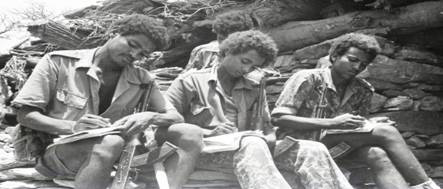
This photograph was taken by Solomon Abrha, a photographer of the 44th Brigade stationed on the northeastern Sahel front in the early 1980s (Source: MOI Facebook). While the EPLF officially started regular education at the Revolutionary School in September 1976, basic education had already begun informally among the guerrilla fighters (Tegadelti) out of necessity and resourcefulness. As illustrated clearly in the picture, the fighters showed an eager dedication to education. All illiterate EPLF fighters learned to read and write, as remaining uneducated was considered shameful. Because teaching materials were scarce, fighters would divide a single pencil among four people. If they obtained a piece of paper from a milk carton, they would sit on a rock and participate in the eradication of illiteracy. Driven by this ethos, the Revolutionary School focused primarily on providing basic literacy and educating orphans. However, the EPLF also made remarkable strides in educational development by expanding its curriculum from grades 3 to 8 during the 1980s. Throughout the liberation struggle, education was not restricted to the Revolutionary School; it was also extended to combat units and fighters across various departments. By integrating these rigorous educational programs with their military duties, EPLF fighters demonstrated a steadfast dedication to learning. Following liberation in May 1991,the majority of these fighters, alongside former Revolutionary School students who had completed the ninth grade, were eager to advance their education.

Demonstrating a strong thirst for learning, former fighters hoped to enrol in secondary school for the new academic year in September 1991. However, the EPLF, having established the Provisional Government of Eritrea (PGE), was reluctant to allow them to continue their studies in higher education. The PGE issued a circular instructing secondary schools not to enrol any ex-combatants who could not provide their school transcripts. This was a deliberate barrier; the government knew that those who joined the EPLF midway through their studies had left their schools behind and were unable to produce these documents. Dr Amanuel, a social studies scholar, do you recall the meeting in Kanjeo regarding the ex-fighters? It was stated there that because they chose to continue their studies, the ex-fighters were labeled as having lost their focus; however, instead of encouraging them to study, the government tried to prevent them from doing so. Dr. Amanuel, as a social studies scholar, do you recall the meeting in Kanjeo regarding the ex-fighters? It was stated there that because they chose to continue their studies, the ex-fighters were labeled as having "lost their focus." However, instead of encouraging them to study, the government tried to prevent them from doing so. Dr. Amanuel is correct; the government did try to exclude former combatants from accessing educational programs. I know this from firsthand experience. When I tried to enroll at Geza Kenisha Secondary School in September 1991, the staff informed me that while they were willing to offer me a place, they had been instructed not to admit any ex-fighters without a school transcript. The government knew that most ex-fighters had interrupted their studies across various regions of Eritrea and provinces of Ethiopia to join the EPLF, and therefore could not provide such documentation. Although the government tried to bar former combatants from enrolling in schools, by the beginning of 1992, some ex-fighters managed to enroll in evening classes at Barka Secondary School at their parents' expense. To address this discrepancy, the PGE allowed all ex-fighters to enroll at Red Sea Secondary School in February 1992. Eager to study, they attended evening classes at both schools after work, from 6 p.m. to 9 p.m. every weekday.

After three months, the Year 11 students sat for their matriculation exams in May 1992. Most passed, allowing them to pursue higher education. This group included former students from the Revolutionary School who had completed Grade 9. Unfortunately, the minister of education tried to discourage these former students by claiming they were too old at around thirty years of age. In reality, most were between 20 and 25. The minister argued that they should instead continue their teaching duties; undeterred, they decided to pursue their studies at the University of Asmara. Although the government was initially unwilling to let ex-fighters pursue their education, some EPLF veterans and former revolutionary school students successfully completed their first year. However, they soon faced sudden interruptions. Those stationed outside Asmara were ordered to return to active duty, while those working in departments within the capital were exempted. This was done deliberately to undermine the fighters' unity, reflecting the government's divide-and-rule strategy. Regarding this, Dr. Amanuel states that the government removed all student-fighters studying at the University of Asmara after independence. The government's eventual closure of the university was, as he notes, simply how the system operates.

 Furthermore, according to a former fighter studying at the university during his second year, the president of the University of Asmara, Dr Woldeab Isaac, informed student-fighters that they had to return to their units. As a result, they could not continue their education. Although a meeting was held and debates ensued, the students concluded that nothing could be done because the directive came directly from the Office of the President. Consequently, neither the administration nor the students had the power to change it. This forced many fighters to drop out of school and return to either their military units or civilian jobs. This hostile attitude toward higher education may have originated from an inferiority complex, as President Isaias Afwerki had been expelled from Addis Ababa University during his freshman year.

Reflecting this hostility, the Eritrean government targeted the University of Asmara from 1992 until its eventual closure in 2006. The Provisional Government of Eritrea (PGE) systematically undermined the nation's sole institution of higher education—founded in 1959—through aggressive policies directed at its staff and students. One piece of evidence of this during the transition period was the dismissal of 35 experienced teachers, who included:

  • Dr Tesfay, lecturer in the Department of Accounting who had challenged Andebrhane, ex-president of the university in the meeting
  • Dr. Semera, lecturer in the Department of Physics
  • Mr. Iyob, lecturer in the Department of Biology who had a good reputation among the students for his teaching skills
  • Dr Nugusse, lecturer in the Department of Economics
  • Father Vittorio Boria, mathematics lecturer and the Capuchin priest
  • Amanuel Melles, head of Marine biology also became the victim of the 1993 UoA staff dismissal. He subsequnetly emigrated to Canada in 1993 from Eritrea.

Dr. Teama, who had worked with Dr. Negusse to develop a distance education programme at Asmara University, believed that the committee's decision to dismiss Dr. Negusse and other academic staff for incompetence was false and politically motivated (Hazell, 2017). This decision seriously affected both the university and the country at large, resulting in the loss of 35 academic staff positions. A detailed response to committee member Dr. Mohamed Kheir Omer by the victims of this 1993 dismissal—Dr. Negusse Araya, Petros Habtemariam, and Mr. Michael Zaid Ghebremedhin—is available on the EHREA response pagehttp://www.ehrea.org/uoares.php. Apart from Professor Legesse, two other professors fell victim to the regime. According to the Eritrean Human Rights Electronic Court (EHREC/EUKHR), authorities detained and dismissed two academics in 2003: Dr. Abdulkader Saleh Mohammed, Chair of the Department of Sociology and Social Work, and Dr. Alexander Naty, a faculty member in the Department of Anthropology and Archaeology at the University of Asmara (UoA). Furthermore, in October 2003, Dr. Naty—who had moved to Eritrea in 1994 to establish the university's Department of Archaeology and Anthropology—was reported dead.

Dr. Ammanuel Mihreteab shared that when Eritrea was awarded 300 scholarships, the PFDJ permitted only two students to accept them. He learned of this in 2009 while serving as a visiting scholar. During his tenure, the dean asked him, "Don’t you have anyone in your country who is educated?" When Dr. Mihreteab asked for clarification, the dean explained, "We sent 300 scholarships to the Ministry of Education, but only two people came to the university." Dr. Mihreteab also recalled a brilliant Eritrean student who achieved a perfect 4.0 at the University of Asmara. The student independently secured a scholarship to a university in Hannover, Germany—a fact Dr. Mihreteab discovered during an academic trip to Germany.
However, the scholarship offer was ultimately declined by Dr. Woldeab, who stated, "We offered it to someone else." When Dr. Mihreteab asked why he did this, Dr. Woldeab's simple response was, "That is our guideline." This exchange clearly illustrates the regime's tactic of enforcing public ignorance to maintain absolute control. (Original text: ኣዶንቒርካ ግዛእ! 300 ስኮላርሺፕ ንኤርትራ ተዋሂቡ፣ ህግደፍ ግን እቲ ዕድል ንኽልተ ሰባት ጥራይ ክህቦ ወሲኑ! ዶክተር ኣማኑአል ምሕረትኣብ https://www.tiktok.com/@mahder83/video/7491700777417723158)

Regarding this guideline, Dr. Teame briefly mentions in his book that the President of Asmara University, Dr. Woldeab, declared that money from any aid agency should be paid directly to the government to spend as they saw fit. Dr. Teame adds that the Norwegian and Swedish aid agencies rejected the President's proposal, apparently having doubts about how their money would be spent (Hazell, 2017). With reference to Dr. Woldeab's view of the donor organization, I also have firsthand experience as a scholarship recipient through a Nordic aid agency. Before Dr. Woldeab took office at the University of Asmara, everything was fine. After he took office, although the donor organization was happy to pay for my third year, he initially refused to extend my scholarship by declining to sign the aid agency's agreement to fund my final year of study. It was only after many months that he finally signed it. During that same period, the Eritrean Embassy in London also refused to renew my passport in order to obstruct my studies, simply because I had not been selected through official government channels. All of the examples above illustrate the government's unwillingness to support individuals pursuing higher education abroad unless they are officially government-sponsored.

Isaias Afwerki’s hostility towards higher education was exacerbated in the early 2000s, when the government's attitude shifted significantly due to fears of political dissent among university students. Driven by the PFDJ's deep-seated scepticism towards intellectuals and a desire to curb the autonomy of the University of Asmara's students, the government announced a mandatory summer work program. Students protested, denouncing it as a "slavery campaign." According to S.Y. (2011), it was in the spring of 2001 that the PFDJ leaders, through their puppet Asmara University ex-President Dr. Woldeab Issak,, announced a plan engaging all university students in a summer work program. The program was designed to “assess the damages” caused by the Eritrean-Ethiopian “border” conflict between 1998 and 2000. While students were informed that the program was for “war damage assessments,” they remained unaware of the underlying motives behind it. Throughout July 2001, students raised multiple grievances that escalated into heated confrontations. Consequently, on 9 August, an order was issued to detain university students across the country. Around 300 students were initially rounded up and taken to a detention camp in Wia, located on the country's eastern escarpment near the Red Sea. Among the detainees were former students of revolutionary schools and children of ex-fighters who had been in the fifth grade when the EPLF liberated Eritrea in 1991.

According to Berhane Habteab (2001), Wolde-Ab turned the university campus into a PFDJ mind-controlling institution instead of maintaining the excellence, neutrality, and independence of the academic environment. Habteab adds that Dr. Wolde-Ab Yisak was well-known for his destructive leadership, which reduced the university's academic standards to a level no better than those of a high school.

. Journey to Wia Detention Camp

By and large, during Woldeab’s tenure, the UoA came under even more intense pressure from the government—particularly in the 2000s, when the university student committee opposed the summer work program. This opposition ultimately led to the university's shutdown, a closure that aligned with a long-term Eritrean government plan dating back to 1992. The policy was rooted in Isaias Afwerki's lifelong mistrust of intellectuals—a trait stemming from the liberation struggle in the 1970s. (Source: http://www.ehrea.org/threat.htm

All of the above facts reflect Isaias Afwerki’s ongoing hostility toward higher education and intellectuals. Therefore, it is worth highlighting how the PFDJ’s policy, particularly under Isaias, enforces public ignorance to maintain control. Eleanor Roosevelt emphasized the power of education and information in shaping freedom, noting that when people are denied knowledge, they become easier to manipulate.

PFDJ  attidute toward  Secondaryeducation 2002 -2026
Warsai-Yikealo Campaign


The Derg regime systematically dismantled Eritrea's educational infrastructure prior to independence. Post-independence—particularly between 1991 and 2001—international organisations such as the World Bank, DANIDA, and USAID actively funded post-war rehabilitation and educational development. This history is thoroughly documented in "Eritrea's Hard-Won Independence and Unmet Expectations" by Semere Solomon, the former Director General of Planning and Development for the Ministry of Education from 1991 to 1998. Semere noted that the Ministry capitalised on opportunities to rebuild and expand infrastructure following wartime destruction and systemic disintegration. However, it failed to fully exploit opportunities to collaborate with regional and international organisations. He added that the government unexpectedly cancelled a joint Technical and Vocational Education and Training program with the World Bank just two days before its scheduled signing.  (Semere, Solomen 2024)

Furthermore, according to Solomon Yohannes's email, following independence, Ainalem "Joe" Mariskos laid the foundation in 1996 for the construction of a college on Hamilton Mountain. His dream was to build this college and graduate 800 to 1,000 students a year so they would play a major role in solving the shortage of educated manpower in the country. However, like the dreams of many sincere Eritreans, Master Ainalem's vision was frustrated by the dictator, Isaias Afwerki.  

An email from Solomon Yohannes, alongside notes from Semere Solomon and Dr. Ammanuel Mihretab, highlights a lack of commitment by the Eritrean government. This attitude directly contradicts the vision the EPLF claimed to have when the Revolutionary School was established in 1976. Furthermore, the progress of education and the future of Eritrea's younger generation became uncertain following the 2000 student protests, the emergence of the G-15 Reformist movement, and the 2001 mass arrest of journalists. Consequently, to control further student protests and challenges from educators and the legal or journalistic professions, the government decided to limit student enrolment in higher education.

Initially, the Eritrean government oversaw a partial expansion of higher education, with new colleges operating as branches of the University of Asmara (UoA) before 2004. For instance, the College of Health Sciences was founded within the university in 1995, later renamed the Asmara College of Health Sciences (ACHS), and made an independent institution in 2005. However, the government stopped the UoA from admitting new students after 2003 to curb campus protests and stall educational growth. Despite various challenges faced by the government since 1992, the UoA produced a total of 10,160 post-independence graduates by its 14th commencement ceremony on July 8, 2006, over half of whom held Bachelor’s degrees (Rena, 2006).


The 36th batch last graduation of UoA on July 8, 2006, before its closed,

Regardless of this milestone, the country's sole institution of higher education, the UoA, eventually closed to prevent the youth from studying political science or entering fields like law and journalism that challenge authority, and was replaced by seven new regional institutes of higher learning, which included :

  • Agricultural Colleges at Hal Hale and Hagaz,
  • Technical school in Massawa,
  • Teacher training institute at Adi Keih,
  • Eritrean Institute of Technology at Mai Nefhi
  • College of Marine Sciences & Technology (COMSAT), Massawa.
  • Halhale College of Business and Economics (HCBE), Halhale.
  • Orotta School of Medicine and Dental Medicine Asmara

As evidenced above, no current higher education institution offers programs in law, journalism, or history. The government established the new college system to replace the University of Asmara (UoA) specifically to shape an economically productive workforce—one easily indoctrinated and posing no threat to the state. This mirrors the strategy used during the liberation struggle, when the EPLF founded revolutionary schools to address staffing shortages. These suppressed disciplines, once exclusive to the UoA, had produced graduates who directly challenged the government in 2000 and 2001, ultimately making those fields targets of the PFDJ regime. Following calls for democratic reforms, security forces—acting on the government's suspension of private newspapers—rounded up a group of leading, university-educated intellectuals, editors, and reporters. The individuals targeted by the regime are pictured below :
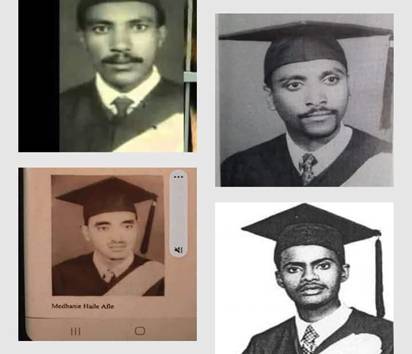

Dawit Habtemichael (Bottom Right): A 1997 graduate from the
and Zemen editor

This stemmed from a deliberate attempt to maintain political control by preventing young people from studying political science or entering authority-challenging fields like law and journalism. This was achieved by closing the University of Asmara (UoA), the sole institution offering those disciplines. If the primary goal of academic expansion is to increase student enrolment and diversify course offerings, a strong case can be made that the university should have remained open. This raises a critical question: why was the institution closed in 2006? Natnae (2006) notes that the government's motivation stemmed from the head of state's paranoia about staying in power. This drive dismantled a once-excellent educational system, destroying the country's only institution of higher learning.

In contrast, other Sub-Saharan African countries like Ethiopia, which were also experiencing transition periods, expanded their institutions of higher learning without closing down their established universities. Since 2000, Ethiopia’s higher education sector has grown from just two public universities to more than 30 public and private institutions. The Ethiopian government expanded access to higher education while retaining its established institutions; these included Addis Ababa University (formerly Haile Selassie I University, established in 1961) and Haramaya University (formerly Alemaya University, established in 1985).    http://wenr.wes.org/2011/06/wenr-june-2011-feature. 

Although the Eritrean government opened the Orotta Medical School in 2007 through a collaboration between the Ministry of Health, George Washington University Medical Center, and Physicians for Peace, Isaias Afwerki ordered all George Washington University personnel—including Dr. Haile Mezgebe, the school's medical director—to leave the country in 2011. This shows that Isaias Afwerki never stopped mistrusting intellectual elites, even after the closure of the University of Asmara. Critics argue that replacing the University of Asmara with separate regional colleges aimed to appeal to the international community rather than broaden educational access. The institution was later closed under the pretext of a transitional period—fulfilling a long-held ambition of Isaias Afwerki, who feared intellectuals might advocate for free speech and democratic debate.

Asmara University was not the only institution targeted by the government after liberation; private schools were targeted as well. This included the SMAP Institute, a private higher education, training, and consultancy provider founded by Professor Tesfay Haile in 2005. Guided by the inspiring motto, "Knowledge is power," the institution had graduated a total of 4,005 students through its first eleven commencements by early 2018. While the lack of Facebook updates since its 12th graduation ceremony in 2019 suggests the institution has closed, alternative sources claim it remains open. Furthermore, despite having the capacity to award BA and MA degrees, the PFDJ has reportedly restricted it to issuing diplomas only.


In addition to this institution, other private schools—such as the Italian School of Asmara, which was established in 1903—were also closed in 2020. These are just a few examples of the private institutes and schools targeted by the PFDJ. Therefore, evidence suggests that the university and other private institutes, such as SMAP, were closed for political reasons—specifically, to establish full government control over colleges and students. This military-style supervision is evident at the Eritrea Institute of Technology (EIT), which is currently administered by Colonel Ezira, a former administrator of Sawa. At this institution, not only is military training mandatory between 4:00 and 7:00 a.m., but both students and academic staff are also kept under close watch. Furthermore, students are barred from choosing their own subjects, which severely restricts their future ambitions. This issue stems from restrictions within the revolutionary school during the liberation struggle. In the words of a former student, "We were not allowed to choose our fields of study or train for the professions we wished to pursue; consequently, we lacked the ambition to compete with those above us." To address staffing shortages, the EPLF redirected former students into roles like teaching, radio operation, or combat (ground, mechanized, or naval forces) rather than training them in critical fields like medicine or pharmacy. This reflects Italian colonial education policy, which limited training to basic agricultural, military, and administrative support roles—such as soldiers, telegraph operators, clerks, and typists [Gottesman 1998, p. 76].

The picture below shows former Revolutionary School students who were assigned to the naval unit at a young age in 1987; they played a significant role in defeating the Ethiopian navy—which was originally formed in 1955—during the liberation of Massawa in 1990. 


As previously noted, government reluctance left most alumni of the Revolutionary School struggling to pursue higher education after liberation. Consequently, the majority went into exile—a direct contradiction of the promises made upon the school's founding in 1976. Similarly, most youth who completed 12th grade after liberation are currently discouraged from continuing their studies, making it crucial to examine the motivations behind the government's actions. During his 1987 meeting with students of the Revolutionary School in the Sahel, veteran Woldeab Woldemariam advised that an educated society plays a vital role in ensuring independence and nation-building. Driven by this advice and other factors, Isaias Afewerki fears empowering these former students—as well as the younger generation—through education, viewing it as a direct threat to his power.

To limit the progress of the youth and enforce state control, the government launched the Warsai Yikaalo Development Campaign (WYDC) in 2002. This followed a crackdown on the reformist movement to suppress dissent by extending national service indefinitely and limiting student enrolment in higher education. To implement this strategy, the Ministry of Education announced in 2002 that the secondary education system would expand to include grade 12. In 2003, the government replaced the highly selective promotion system in senior secondary education with a policy of mass promotion. Under this new mandate, all twelfth-grade students nationwide were required to complete their final academic year at a centralised boarding facility in Sawa, taking their matriculation exam at the national military training centre.

The picture depicts students sitting for the National Secondary Education Examination at the Sawa Test Center. 


Before the campaign's inception, National Service participants who finished their service but missed the university entrance benchmark typically worked within various ministry departments, occupying teaching or administrative roles. This assignment allowed them to continue their education by enrolling in private institutions, such as SMAP, to earn short-course certificates and diplomas. However, under the Warsai-Yikealo Development Campaign policy, 12th-grade students in Sawa who fail to qualify for higher education are directly drafted into the military. Since the launch of the campaign in 2002, the PFDJ's education policy has severely deteriorated. As a result, 11,000 to 15,000 students are sent to Sawa every year. Within the Eritrean education system, only 12.2% of these students achieve degree entry points, and just 7.59% reach diploma entry points. This is confirmed by Rena (2007), who notes that only about 3% of youth in the 17–23 age group get an opportunity for higher education, transferring to the new technical college in Mai Nefhi. Students who fail are immediately drafted into the army, where they spend their most productive years in uncertainty. Approximately 10,000 school leavers are sent every year to the army, restricted to road, dam, and house construction as part of their national service.

Evidence of this is shown in Table 3, “Forecast of Student Enrolments at the 12th Grade Level and at Tertiary Institutions,” which formed part of the 10-year plan published by the Ministry of Education in 2006. The table projected that, of the 299,600 students enrolled in the 12th grade between the 2006/2007 and 2014/2015 academic years, only 105,400 would be accepted into tertiary education. The remaining 194,200 students would face indefinite military conscription, meaning that approximately 65% of the students were projected to be drafted into the army over that period.  

Table 3 :Forecast of student enrolments at the 12th grade level and at tertiary institutions
Academic year
Students enrolled in the 12th grade
Students accepted for tertiary education
2006/2007
21, 700
5, 400
2007/2008
22, 600
8, 700
2008/2009
24, 900
9, 000
2009/2010
27, 900
10, 000
2010/2011
31, 400
11, 200
2011/2012
35, 600
12, 600
2012/2013
40, 400
14, 200
2013/2014
45, 200
16, 200
2014/2015
49, 900
18, 100
Total                                              299, 600                                          105, 400
source Renai (2008)  Education in Eritrea: Developmental Challenges

This stagnation is reflected in technical schooling; an official Ministry of Information source (2026) reports that only 5,321 students graduated from Mayhabar Technical School over the 29-year span between 1997 and 2026. By restricting higher education, the regime intentionally keeps the population uneducated and misinformed. This systemic manipulation leaves the younger generation easier to dominate, effectively neutralizing their ability to question authority, organise resistance, or challenge their exploitation.

The Eritrean people faced severe restrictions on education during Italian colonialism, a policy designed to foster ignorance and prevent fierce resistance to colonial rule. Reflecting this, between 1934 and the 1940s—prior to the defeat of Italian colonialism—only about 800 students graduated from four-year elementary schools, while a mere 81 received secondary schooling. Examining the Italian colonial experience reveals that Italy deliberately avoided overeducating the natives for fear of creating "misfits." It was well-known that the primary objective of the colonial educational policy was to produce future soldiers. Similarly, under the rule of Isaias Afwerki, this educational neglect is intentional. By restricting education to trades such as carpentry or plumbing, thousands of school leavers are funnelled into military service every year. Since National Service was launched, Isaias has never missed a single Sawa graduation ceremony; over the course of 38 training rounds, he has maintained a perfect attendance record. Conversely, he has never attended a graduation ceremony at the University of Asmara or any other higher education institute from 1992 to the present, clearly demonstrating his hostility toward higher education.


Graduation ceremony of the Sawa military training

Since the launch of the Warsai Yekalo campaign, not only are approximately 10,000 school leavers sent to the army every year, but it is also common for the government to enforce the conscription of adults under 50. Consequently, the Eritrean people have a long history of falling victim to conscription and war. According to Uoldelul Chelati Dirar (2012), between 1890 and 1941, approximately 135,000 Eritreans were conscripted into Italian military service as Ascari. Many of them were killed on the battlefields of Ethiopia, Libya, and Somalia. Similarly, under PFDJ rule, thousands of young Eritreans have become victims of war. This is particularly evident during the 1998–2000 and 2020–2022 conflicts, as well as the clashes in October 2026. Over the last 25 years, more than 70,000 young people have been killed—a toll exceeding the total casualties of the 30-year liberation struggle. Ultimately, Eritrea has now lost more youth to modern conflicts than it did to conscription and death under Italian colonialism.

Eritrean youth have a long history of falling victim to conscription and war. According to Dirar, Uoldelul Chelati (2012), between 1890 and 1941, approximately 135,000 Eritreans were conscripted into Italian military service as Ascari. Many of them were killed on the battlefields of Ethiopia, Libya, and Somalia. Similarly, under PFDJ rule, thousands of young Eritreans have become victims of war. This is particularly evident during the 1998–2000 and 2020–2022 conflicts, as well as the clashes in October 2026. Over the last 25 years, more than 70,000 mostly young people have been killed—a toll exceeding the total casualties of the 30-year liberation struggle  Ultimately, Eritrea has now lost more youth to modern conflicts than it endured through conscription and death under Italian colonialism."

Driven by conscription, repression, recurrent conflicts with neighboring countries, and a complete absence of hope under PFDJ rule, a vast number of young and adult Eritreans have been forced into exile. Today, approximately 300,000 young people from the 1970s, 1980s, and 1990s generations reside as refugees in nations like Ethiopia, Israel, Sudan, and various Western European states. According to Patrick Kingsley (2015) and Amnesty International (2015), Eritreans constitute 8% of those crossing the Mediterranean Sea. This makes them the third-largest nationality, trailing only Syrians at 50% and Afghans at 13%. This mass exodus is the direct consequence of indefinite national service, mandatory conscription, and the deliberate suppression of intellectual growth—policies enacted since 2001 to maintain the regime's grip on power.

It is a modern paradox that developing countries like Eritrea, which have the greatest need for professionals, fail to utilize them effectively. Instead, they lose their best-educated youth to developed nations, leaving a massive gap in domestic development. This outcome directly contradicts the EPLF’s National Democratic Program—adopted during its first congress—and betrays the hope preached to Revolutionary School students during the liberation struggle. In light of these conditions, Eritrea's socio-economic future is at risk; the eventual collapse of the regime will leave a severe deficit of the experts and scholars needed for reconstruction. Planning a long-term strategy to address this shortfall is vital to secure sustainable development for future generations and ensure these mistakes are never repeated.

Conclusion

The EPLF initially fostered a passion for learning during the liberation struggle by establishing a boarding school in the liberated area at Zero. However, the front lacked a clear vision for academic education while preparing to establish the Revolutionary School in late 1975. This was evident in its failure to effectively leverage the expertise of world-class scholars who had joined the front, such as Hagos Gebremariam, a geography graduate and teaching committee member who was later martyred in Gahtelay.

Contrary to the EPLF’s 1975 wartime slogan, “Illiteracy is our main enemy,” which inspired fighters to pursue education, many veterans and former revolutionary school students faced a grim postwar reality. Despite wanting to pursue higher education, the government barred them from doing so. Consequently, former fighters who had sacrificed their youth for liberation—expecting peace in return—soon fled into exile. Most former revolutionary school students also left the country, realizing they would never receive the education they had been promised before the 1991 liberation.

Additionally, the post-independence generation was negatively impacted by government educational policies; most fled the country after completing their national service once they realized there was no hope. Initially, when the Eritrean government introduced its National Service program in 1994, it gave young people hope that completing their service would lead to employment opportunities. However, this turned out to be untrue. Regarding this deception, Lula stated in her testimony—published in Violence Against Women on November 27, 2013—that “the government’s propaganda promises jobs to the youth upon completing the obligatory military service. But it prevents us from studying, and by doing so, steals our ability to realize our dreams.” Furthermore, the youth lost their bright future following the Warsai Yekalo Development Campaign in 2002. Due to the implementation of indefinite national service, most young, productive members of the labor force, including higher education graduates, have fled the country. These harsh conditions, which include detention, torture, and prolonged military service, have become a major factor in a mass exodus that has significantly worsened the brain drain.

The Eritrean government has shown no interest in the bright future of its younger generation. This is particularly true of Isaias Afwerki, who institutionalized ignorance by positioning himself as an anti-education dictator. He has inflicted incalculable damage on Eritrean society since the 1970s by focusing primarily on eliminating adult illiteracy while limiting Revolutionary School students to a basic, five-year combined elementary and middle school education. This trend has continued into the post-independence era, where the majority of students only reach the 12th grade and very few are permitted to pursue higher education. Witnessing this systematic deprivation of the youth in the 21st century, one can fairly argue that Isaias and his collaborators have done more to marginalize Eritrean society than anyone else in history, with the sole exception of the Italian colonizers. As a one-time British administration official succinctly expressed regarding the Italian colonial policy of education: 'Keep the Eritrean's belly filled while keeping his brain empty' (Trevaskis, 1960, cited in Bereketeab).

Over the last two decades, the regime has systematically stripped the country of its brightest minds out of a deep mistrust of higher education, viewing intellectuals as a threat to the state. Meanwhile, the government permits the expansion of basic literacy only to create an economically productive workforce that is easily indoctrinated. Similarly, following the founding of the Revolutionary School in 1976 to address staffing shortages, the EPLF redirected students into immediate operational roles like teaching, radio operation, and combat by prioritizing these immediate needs. As the harassment of intellectuals intensifies under the PFDJ, the nation's brain drain has accelerated. This flight of talent has historical roots tracing back to the 30-year liberation struggle. During that period, Eritrea lost many of its brightest citizens to the repression and harassment of the Ethiopian government, as well as internal purges within both liberation fronts, the ELF and EPLF

Since independence, the greatest tragedy in Eritrea has been the deliberate and systematic destruction of its youth, perpetrated not only through killing and imprisonment but also through educational deprivation. Even exiled youth struggle to access educational opportunities in Western countries. Bound by limited academic backgrounds, they often find it difficult to build a strong educational foundation for their own children. Ultimately, this reality deeply contradicts the EPLF’s wartime promises during the liberation struggle, which were exemplified by the founding of the Revolutionary School in 1976. When meeting young people who managed to escape to the West, the sheer level of illiteracy and academic deficit is shocking; the majority are educationally no better off than their great-grandfathers, who lacked access to schooling entirely. Consequently, the number of educated Eritreans has fallen below the levels seen in the 1960s and 1970s.
From this perspective, one could argue that the post-independence regime—the EPLF—failed to develop a sustainable, long-term educational strategy. This failure directly contradicted the organization's stated ideals, both during the liberation struggle and in the subsequent post-independence era.

References

  • Amanue  (n.d)(ኣዶንቒርካ ግዛእ! 300 ስኮላርሺፕ ንኤርትራ ተዋሂቡ፣ ህግደፍ ግን እቲ ዕድል ንኽልተ ሰባት ጥራይ ክህቦ ወሲኑ! ዶክተር ኣማኑአል ምሕረትኣብ  https://www.facebook.com/watch/?v=1566336121885554
  • Amenstet International (2015) Just Deserters: Why indefinite national service in Eritrea has created a generation of refugees, https://reliefweb.int/report/eritrea/just-deserters-why-indefinite-national-service-eritrea-has-created-generation
  • BBC News (2002) Student's daring jailbreak in Eritrea. http://news.bbc.co.uk/1/hi/world/africa/2182775.stm
  • EHDR (2003) EHDR-UK Concerned about Academic Freedom in Eritrea.
  • Gottesman, Les (1998) To fight and learn http://www.ehrea.org/EHDR-UK%20Concerned%20about%20Academic%20Freedom%20in%20Eritrea.htm
  • Hagos, Mefin (2023) An African revolution reclaimed: a memoir of Eritrean freedom fighter Mesfin Hagos
  • Habte Selassie (2007) The Crown and the pen: the memoirs of a lawyer turned rebel
  • Hazell (2017) Long way from Adi Ghehad: Jorney of an asylun seeker: Dr Teame Mebrahtu.
  • Berhane Habteab (2001)) http://www.ehrea.org/threat.htm
  • Bereketeab, Redie (2000) Eritrea the making of a nation 1890-1991
  • Kelete, Woldezgi (2026) ቤት ትምህርቲ ሰውራ ካብ ምምስራቱ ምሕሳቡ ይብርትዕ፡ ፍርያቱ ከኣ ዝያዳ የዅርዕ! https://x.com/shabait/status/2095748883439882387
  • Kidane, Resoum (2017) Primary and secondary education in post liberation http://www.ehrea.org/edprim.php
  • Kidane, Resoum (2006)An Entire Generation Denied Higher Education?   Are we going to stay silent? http://harep.org/ifaapr/uoa.htm
  • Kingsley,Patrick (2015) Refugee crisis: apart from Syrians, who is travelling to Europe. https://www.theguardian.com/world/2015/sep/10/refugee-crisis-apart-from-syrians-who-else-is-travelling-to-europe
  • Killion, Tom (1991)Historical dictionary of Eritrea
  • MIO (2026)  Mai-Habar Technical School graduates 143 students, https://shabait.com/2026/06/27/mai-habar-technical-school-graduates-143-students/
  • Natnael, Paulos M. (2006) University of Asmera - Demise by Design. http://ehrea.org/unipaul.htm
  • Negusse Araya, Petros Habtemariam, Michael Zaid Ghebremedhin  (2014)University of Asmara: Victims of 1993 Academic Staff Dismissal – (A response to Dr Mohamed Kheir Omer) http://www.ehrea.org/uoares.php
  • Rena, Ravinder (2001)Eritrean education retrospect and prospect
  • Rena, Ravinde (2007) Challenges for higher education in eritrea in the post-independent period to the present – a case of asmara university  https://mpra.ub.uni-muenchen.de/11160/1/MPRA_paper_11160.pdf
  • Renai, Ravinde; (2008) Education in Eritrea: Developmental Challenges.https://www.researchgate.net/publication/23779719_Education_in_Eritrea_Developmental_Challenges
  • Dirar, Uoldelul Chelati  (2012) From Warriors to Urban Dwellers https://journals.openedition.org/etudesafricaines/4717
  • S.Y.  (2011 The event that I will never forget as long as I live.http://www.ehrea.org/wiadent.php
  • Sherman, Richard (1980) Eritrea, the unfinished revolution
  • Solomon, Semere) 2024  Eritrea’s Hard-won Independence and Unmet Expectations,
    SMAP  https://www.facebook.com/p/SMAP-Institute-of-Training-Education-Research-and-Consultancy-100063701880857/
  • Tesfamariam, Biniam Zeray   (2003) Provision of Schooling by the Eritrean Peoples Liberation Front (EPLF) in the Field from 1976-91  https://uwcscholar.uwc.ac.za:8443/server/api/core/bitstreams/d883ea84-719d-472b-8af2-ef0898b2185d/content
  • Tsegai, Samuel  2(006)  University of Asmara: A Threat to PIA http://www.ehrea.org/threat.htm
  • Tewolde Kahsay  (2020)  ብዛዕባ ትሕቲ ዕድመ ውትህድርና ተማሃራይ ቤ/ት/ሰውራ http://www.ehrea.org/zerosc.php
  • Trevaskis, G.K.N (1960)Eritrea: a Colony in Transition:


�


                      ehrea.org © 2004-2017. Contact: This email address is being protected from spambots. You need JavaScript enabled to view it.